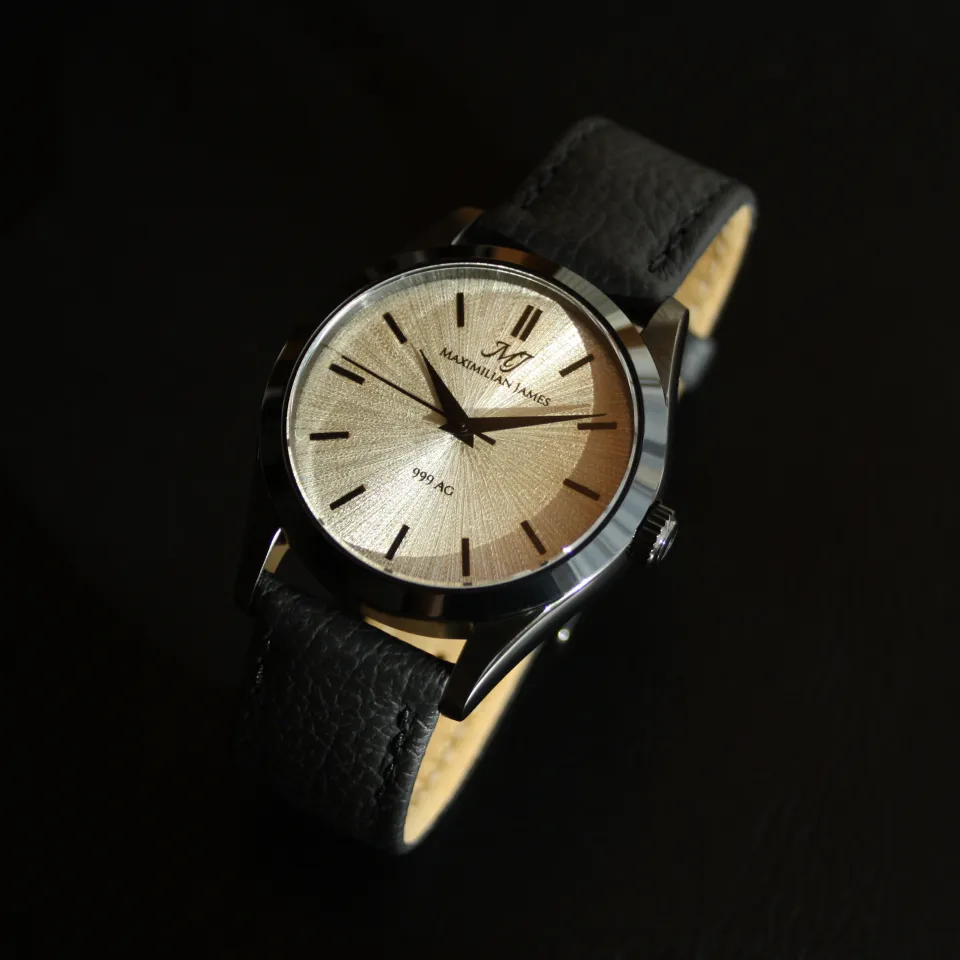
MJ Silber Uhr
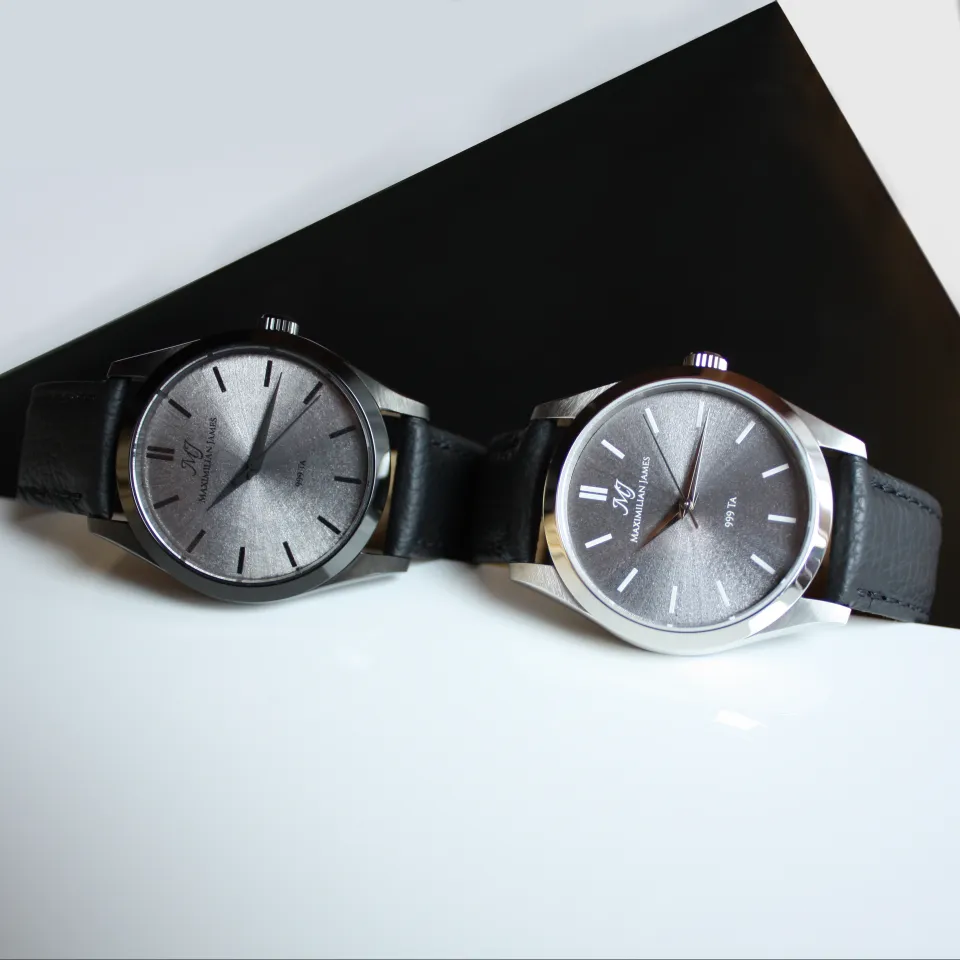
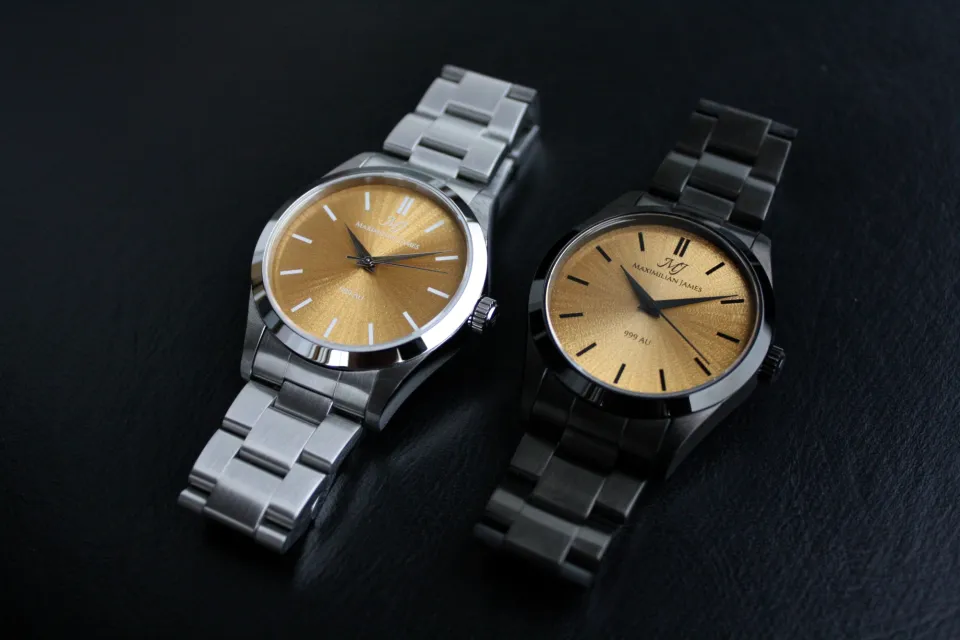
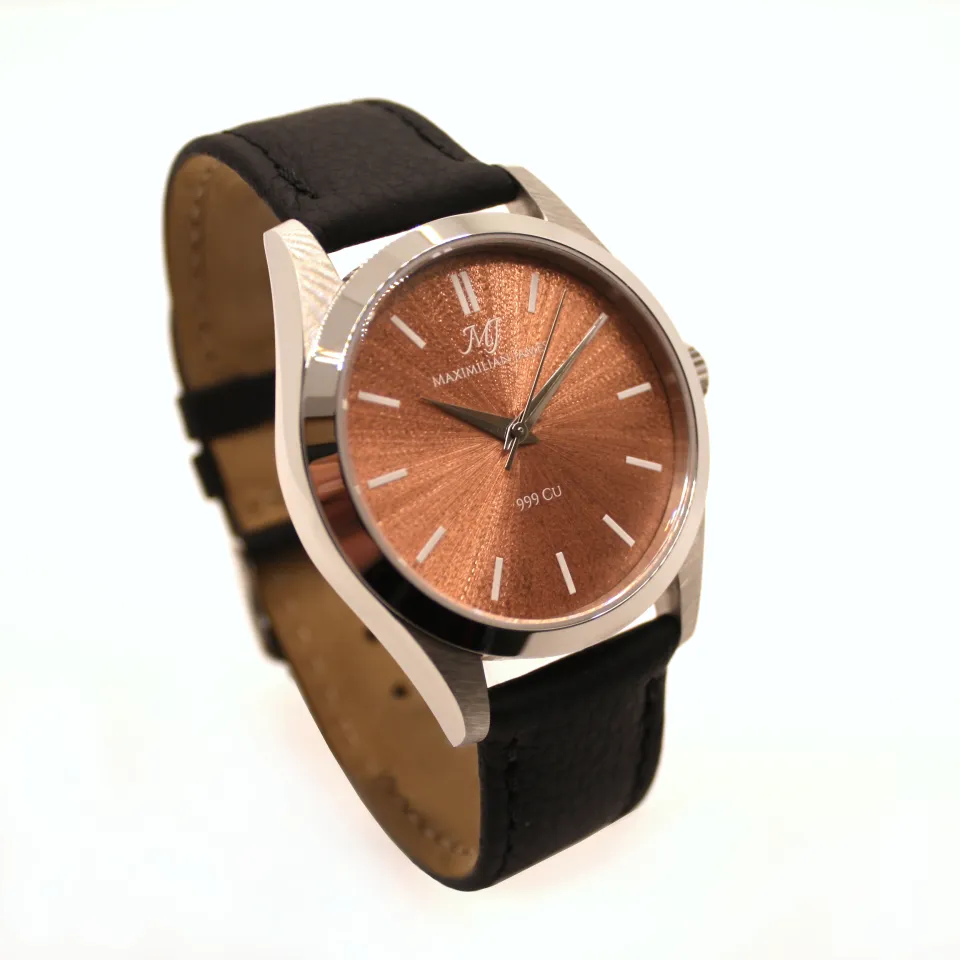
Eine Uhr, ein Zifferblatt, ein Element. Ein 39-mm-Gehäuse und ein Schweizer Automatikwerk, mit einem Zifferblatt aus unlegiertem Metall. Hier wird das pure Element perfekt in Szene gesetzt.
Die Uhren werden von Maximilian James verkauft und versandt. Wir liefern und zertifizieren das Zifferblattmetall.
- 39-mm-Stahlgehäuse · Saphirglas · Sellita SW300
- Seriennummer im Rotor graviert
- Sunburst-Schliff von Hand
- Montiert und geprüft in Deutschland
Vier Schritte, drei Werkstätten
Wie das Zifferblatt entstehtTechnische Daten
Sechsundsiebzig Stück, weltweit
Die Black Limited umfasst sechsundsiebzig Uhren und endet dort — DLC-beschichtetes Gehäuse, Band und Schließe, mit der Nummer im Rotor graviert. Die Zahl ist keine runde Marketingzahl.
Wie sie sich am Handgelenk anfühlt
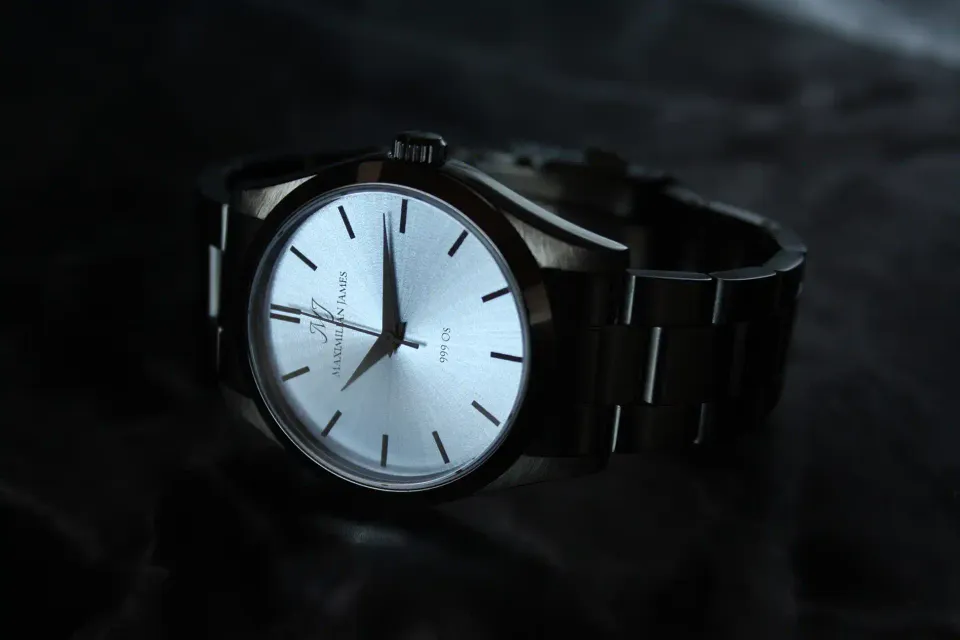
Zuerst bemerkt man das Gewicht, besonders bei Osmium — dem dichtesten in der Natur vorkommenden Element. Selbst bei 0,7 mm verleiht das Zifferblatt einer 39-mm-Uhr eine Schwere, die Fotos nicht vermitteln können.
„Ein normales Zifferblatt ist 0,3 Millimeter dick und besteht aus Messing oder einem anderen unedlen Metall. Hier reden wir von 0,7 Millimetern des dichtesten Elements der Erde. Allein das Zifferblatt wiegt also schon 11 Gramm. Insgesamt ist die Uhr daher verhältnismäßig schwer für ihre kompakte Größe - was man am Handgelenk spürt und auch spüren soll, denn der Mensch assoziieret Gewicht mit Qualität."
Maximilian James, MJ Watches, August 2026
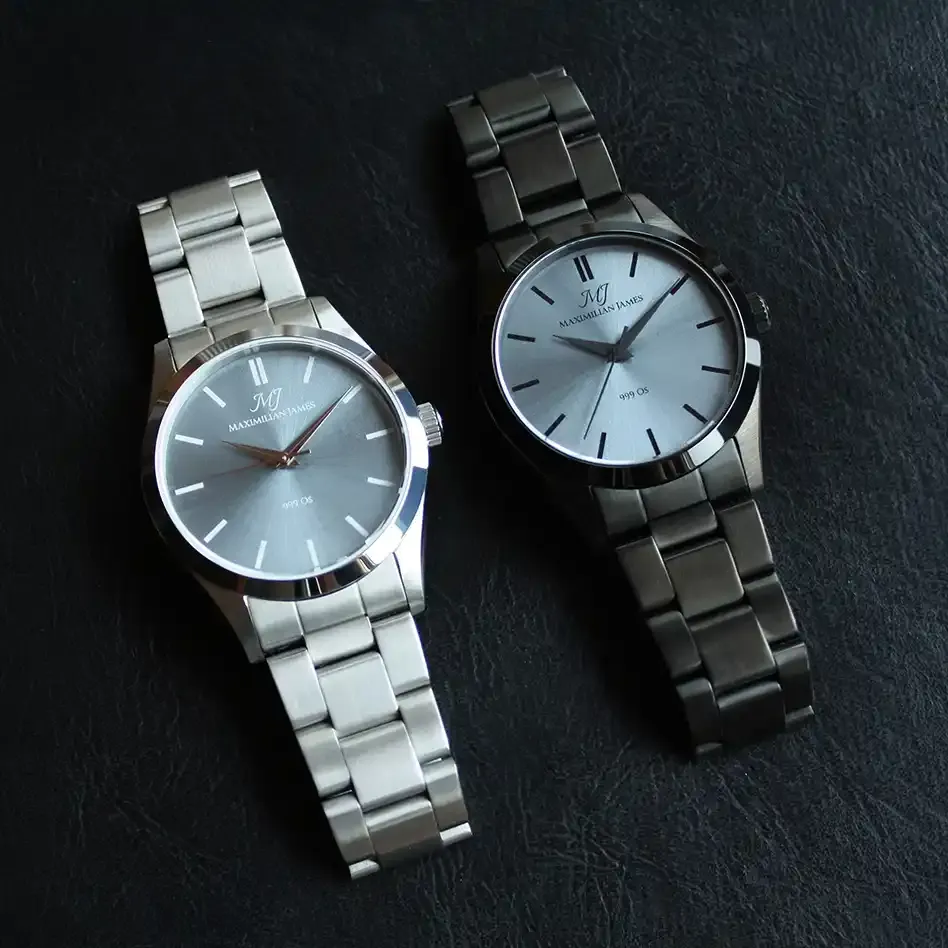
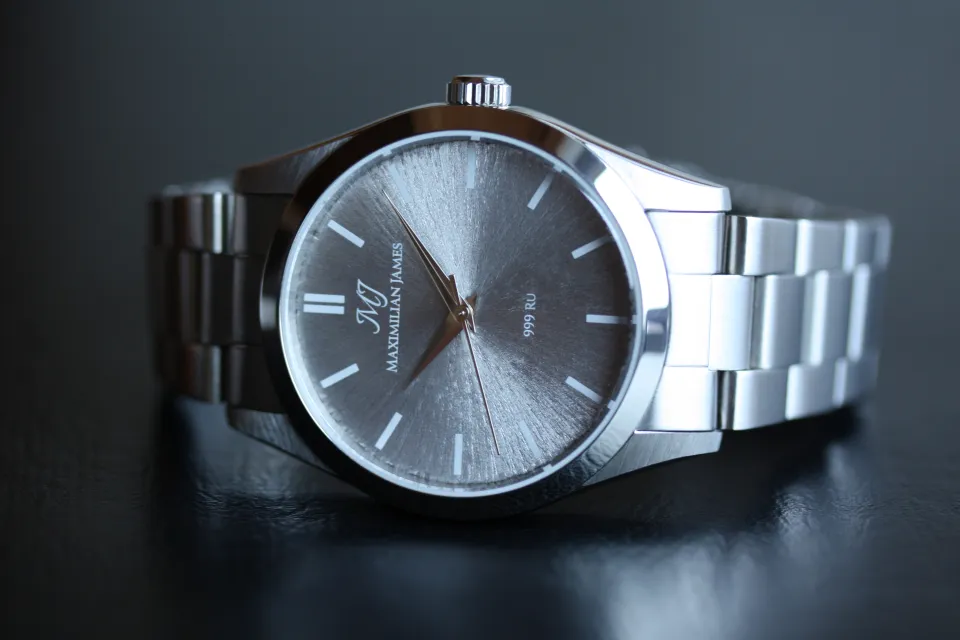
Dann die Farbe — hier trennen sich die Metalle. Osmium hat eine einzigartige bläuliche Farbe. Ruthenium ist dunkler und samtig, absorbiert Licht eher, als es zurückzuwerfen. Das gibt den Zeigern einen ungewöhnlich hohen Kontrast. Tantal trägt einen grauen Schimmer und kann leicht violett wirken. Die meisten Menschen können es nicht einordnen. Nichts davon ist Pigment oder Beschichtung — der Klarlack liegt über dem Metall, ohne es zu verändern.
„Osmium ist im Bezug auf die Farbe einzigartig. Im richtigen Licht lebt es auf und man sieht dieses blaue Schimmern — kühl, elegant, fast mystisch. In künstlich, warmen Licht wirkt es etwas gräulicher. Es hängt auch davon ab, ob man die Standarduhr oder die DLC-Black hat, denn das Schwarz gibt dem Zifferblatt einen noch markanteren Ausdruck. Jeder muss es selbst sehen. Meine persönliche Meinung: Am schönsten sieht es draußen an einem bewölkten Tag aus."
Maximilian James, MJ Watches, August 2026
Weil jeder Sunburst-Schliff von Hand geführt wird, verhält sich kein Zifferblatt exakt wie das andere. Mit 39 mm Durchmesser, 8,65 mm Höhe, 5 ATM und Saphirglas ist sie als Alltagsuhr gebaut, nicht als Vitrinenstück. Wenn Sie sie selbst sehen oder sich von Maximilian beraten lassen möchten, melden Sie sich einfach bei ihm.

Gefertigt von Maximilian James
Trotz vieler Rückschläge in der Entwicklung, wie gebrochenen Zifferblättern, hat Maximilian nie aufgegeben. Er schleift jedes Zifferblatt selbst von Hand in seiner Werkstätte. Das Ergebnis sind wunderbare Uhren seiner Marke, die man gesehen haben muss.
Maximilian James kennenlernenÜber diese Uhr
Fragen speziell zu Elementmetall-Zifferblättern.
Bei Maximilian James. Er baut die Uhren, verkauft und versendet sie. Unser Teil liegt davor: Wir produzieren die Zifferblätter aus Osmium, Ruthenium und Tantal, zertifizieren das Metall und liefern es an ihn. Die Konfiguration hier führt Sie zum passenden Produkt in seinem Shop.
Wenn Sie ein Zifferblatt aus einem anderen Element möchten, leiten wir die Anfrage gerne an ihn weiter.
Ja — jedes Zifferblatt trägt einen dünnen Klarlack, der nach dem Sunburst-Schliff aufgebracht wird. Er erfüllt zwei Aufgaben: Er schützt die Oberfläche bei Kupfer und Silber vor Oxidation. Und er trägt den Feindruck: das MJ-Watches-Logo, das Elementkürzel und die Mindestreinheit des Metalls.
Der Lack ist keine Beschichtung im Sinne einer Plattierung und keine Tönung. Er liegt über dem Metall, statt es zu verändern, und lässt sich mit Spiritus rückstandslos entfernen — darunter liegt das unlegierte Element, unverändert.
Die Rückseite des Zifferblatts ist nicht bedruckt, sondern direkt ins Metall graviert — mit dem MetaMetals-Logo und der Seriennummer, die auch auf Ihrem Zertifikat steht.
„Die Zifferblätter brauchen keine Pflege. Sie sitzen in einem geschlossenen Gehäuse, es gelangt also keine neue Luft an sie, auch nicht beim Stellen der Zeit. Alle Zifferblätter haben zudem eine sehr dünne Beschichtung, die man mit dem Auge nicht sieht. Es gibt nichts zu befürchten — in hundert Jahren sehen sie aus wie heute."
Maximilian James, MJ Watches, August 2026
Ja. Die Bedenken, von denen man liest, betreffen Osmium in Pulverform und festes Osmium oberhalb von etwa 400 °C, wo sich Osmiumtetroxid in höheren Mengen bilden kann. Beides trifft auf ein poliertes, festes Zifferblatt unter geschlossenem Saphirglas bei Raumtemperatur nicht zu. Die Bildungsrate ist bei korrekt gesintertem Osmium unterhalb von 400 °C vernachlässigbar. Das Handhabungsrisiko liegt in der Fertigung, und dort wird unter kontrollierten Bedingungen verfahren.
„Ich versuche, ehrlich zu sein. Wenn Geld keine Rolle spielt, nehmen Sie das, was Ihnen am besten gefällt — wenn Sie Kupfer mögen, nehmen Sie Kupfer; wenn Sie Ruthenium mögen, nehmen Sie Ruthenium."
Maximilian James, MJ Watches, August 2026
Osmium, wenn Sie das seltenste und schwerste Metall wollen — und das Blaugrau, das kein anderes Element von Natur aus hat. Ruthenium, wenn Ablesbarkeit zählt: Die dunkle, lichtabsorbierende Oberfläche hebt die Zeiger scharf hervor. Tantal für den grauen, leicht violetten Schimmer.
Gold, Silber und Kupfer sind ebenfalls schöne Optionen — unlegiert, aber keine Platinmetalle. Silber und Kupfer sind günstiger. Jedes Zifferblatt, das wir liefern, ist von uns zertifiziert, unabhängig vom gewählten Metall.
Manche möchten außerdem, dass die Uhr zu ihrem Stil passt, speziell was die verschiedenen Zifferblattfarben betrifft. Wenn Sie dazu Fragen haben, berät Sie Maximilian gern. Schreiben Sie ihm einfach.
In manchen Fällen nicht wirklich, da die Elementmetall-Zifferblätter dicker sind als gewöhnliche Uhrenzifferblätter. In den meisten Fällen ergibt es mehr Sinn, einfach eine reguläre Maximilian-James-Uhr zu kaufen, da Aufwand und Kosten für den Umbau von Werk und Zeigern einer anderen Uhr sowie das Schneiden eines Zifferblatts mit individuellem Durchmesser den Aufwand meist nicht wert sind. Falls Sie trotzdem interessiert sind, senden Sie Maximilian einfach die Referenz und er wirft einen Blick darauf.