What is a commodity NFT?
Tokenized precious metals are no longer a concept but a growing asset class. In this sector tokenized gold is by far the largest part of this market today: Established providers already let investors hold gold-backed tokens on the blockchain, and the combined market capitalization of these projects already exceeds one billion US dollars.
In most cases, tokenization refers to a divisible and transferable unit on the blockchain. The best-known gold tokens are based on this principle of fungibility. With that one trades and owns freely interchangeable fractions of a real bar. If the only intention is to own a certain quantity of a commodity digitally, that may be convenient. But as soon as it comes to true physical ownership, questions arise that are more than just a philosophical discussion about the definition of "ownership":
- Can I have the underlying asset delivered? And if so, how, since I only own certain fractions of it?
- Can a delivered physical asset be stored again and re-tokenized?
- Which exact piece do I actually own?
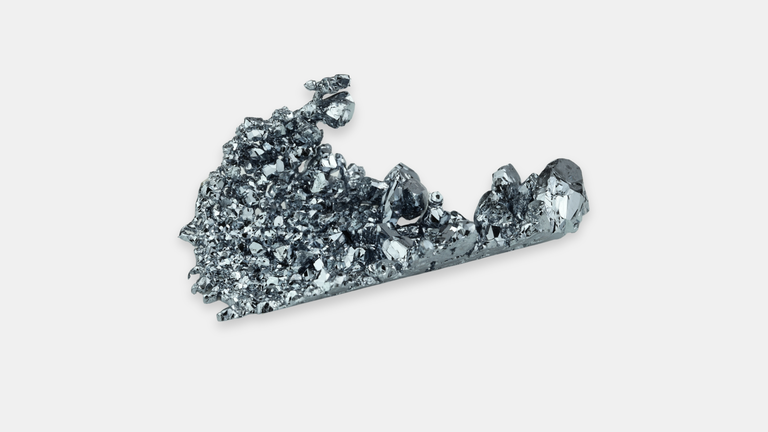
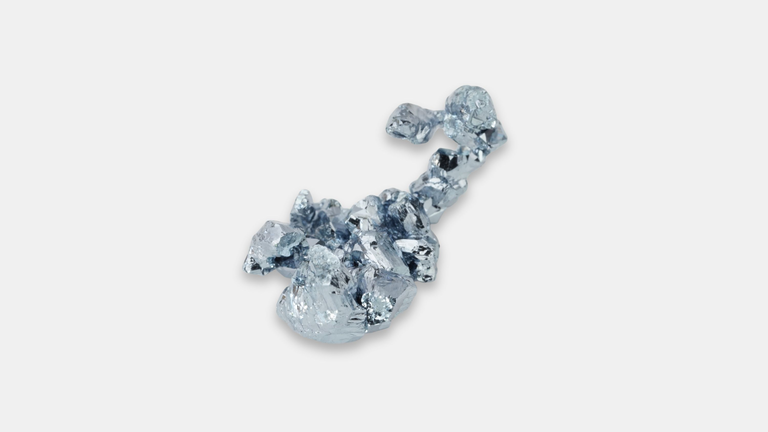
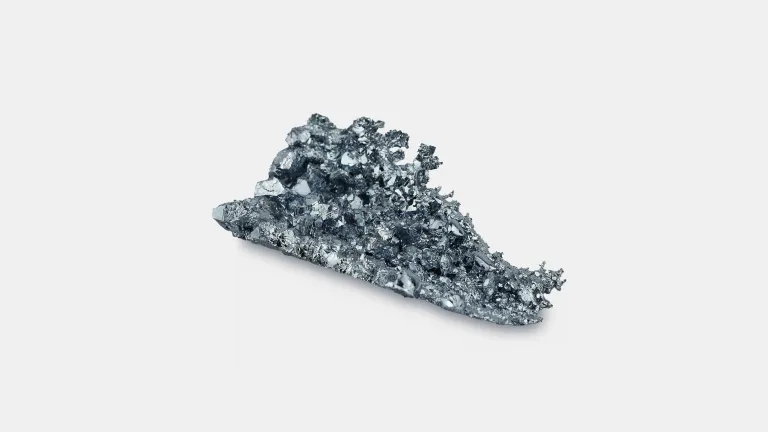
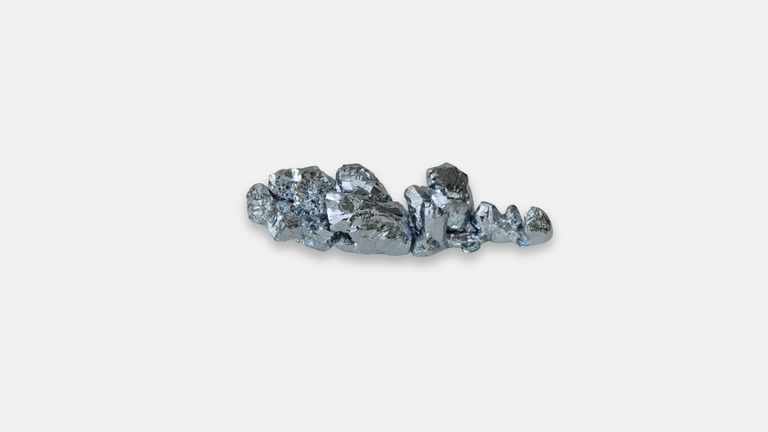
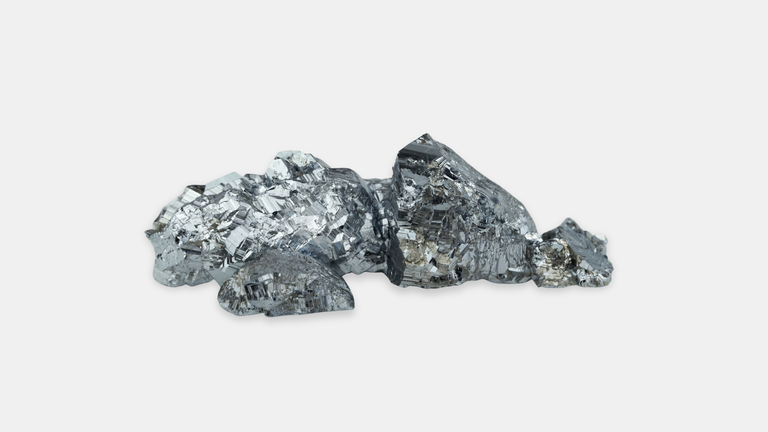
At MetaMetals, the specialization in rare platinum-group metals and precious-metal crystals adds further requirements. Our products are highly rare osmium crystals and precious-metal bars produced in Austria. Each precious-metal crystal is grown through a complex chemical vapor transport process that creates an unrepeatable surface structure. That adds further questions:
- Can a crystal, in its unique structure, be brought onto the blockchain?
- Can a digital representation of a specific precious-metal crystal be used to represent it?
- Is there a way to make the beauty of such a crystal digitally accessible to a buyer as well?
This is exactly where MetaMetals takes a non-fungible approach: One single, indivisible, non-interchangeable token is assigned to a real-world asset (RWA) via the NFT standard. That is the fundamental difference between a commodity NFT and a gold-backed ERC-20 token, where every token is interchangeable. This distinction between fungible and non-fungible is described in detail, with a graphic, in the Fungible vs. non-fungible section of the tokenization overview.
Each NFT is linked to additional metadata. This makes it possible to display specific designs and to store information — such as serial number, weight or other specific details — directly on the blockchain, or to link to media resources. This is precisely what answers the questions described above. In addition, we are programming a set of smart contracts to bring further functionality to users on the blockchain and conveniently combine it with our physical goods.

Our core definition
What a MetaMetals commodity NFT is
A commodity NFT is a non-fungible token that is permanently bound to a real, physical precious metal and backed 1:1 in an audited vault. It is not further divisible and represents exactly one specific piece.
It has programmed functionality that, among other things, ensures the correct digital representation as well as the link from the blockchain to the physical good — and back. The key aspects are on- and offboarding as well as the correct digital representation of a unique asset via the NFT's metadata.
As far as we know, the term and description "commodity NFT" is not yet established in the blockchain industry — but for us, the key aspects mentioned above are essential. On/offboarding (redeem) ensures that an owner can actually exchange their NFT for the physical good in the audited vault, and vice versa. Without this functionality, a real-world asset makes no sense in our view, because otherwise you never truly own it. That is exactly what we want to enable and guarantee for buyers. The representation of the unique physical asset via metadata comes with the built-in capabilities of the NFT standard and should be used by providers accordingly.
MetaMetals commodity NFTs — at a glance
Core functionality
- Blockchain-based
- On/offboarding mechanism
- Physical backing
- Digital representation of the physical asset
- Non-fungible & unique
Advanced functionality
- On-chain storage-fee collection
- Auctions for unpaid storage fees
- Updatable designs
Beyond this, MetaMetals offers further functionality for commodity NFTs that goes beyond this core definition. We are programming a set of smart contracts that ensures the functionality mentioned above and provides more on the blockchain: The collection of storage fees and auctions when these remain unpaid for too long, as well as updatable designs, so that buyers can purchase additional designs to express their individuality and visualize the full range of the structural beauty of precious-metal crystals.
Commodity NFTs compared with gold tokens and diamond NFTs
There are already several established projects in the field of tokenized precious metals. Here is how MetaMetals commodity NFTs differ from the best-known approaches:
| Gold token A | Gold token B | Diamond NFT | MetaMetals* | |
|---|---|---|---|---|
| Asset | Gold | Gold | Diamonds | Osmium, iridium, rhodium — expandable |
| Token type | ERC-20 (fungible) | ERC-20 (fungible) | NFT (non-fungible) | NFT (non-fungible) |
| Physical backing | 1 token = 1 troy ounce of gold | 1 token = 1 troy ounce of gold | 1 NFT = 1 certified diamond | 1 NFT = 1 specific crystal |
| Unique asset? | No (share of a batch) | No (share of a batch) | Yes | Yes |
| Proof | Serial-number lookup | Bar list | External certificate | Serial number + signed PDF certificate |
| Physical redemption | from ~1 bar, or pro rata via partners | from a defined minimum quantity | Yes | Yes |
| Onboarding | No | No | No | Yes |
| Audit frequency | Monthly (third party) | Quarterly | — | Regular audits |
| Chain | Ethereum | Ethereum / others | other chain | Ethereum |
* Our commodity NFTs and the functionality described here are still in development or planning. The other projects already have a finished product.
The most important difference between gold tokens and commodity NFTs (fungible vs. non-fungible) has already been mentioned several times. There is one project that tokenizes diamonds using an NFT approach. However, it does not offer the option of re-onboarding a diamond. That means that, after offboarding, the diamond cannot be re-tokenized with the provider. There is only one direction, and this approach therefore does not meet our definition of commodity NFTs. The MetaMetals approach also offers the option of re-onboarding and targets a different asset class — platinum-group metals and precious-metal crystals instead of gemstones. On top of that, we complement our NFTs with additional functionality.
Advantages of fungible tokens over an NFT approach
For the sake of completeness, the advantages of fungible tokens over an NFT approach should also be mentioned. Three points carry particular weight.
Tradeability and liquidity
A fungible token makes an asset easier to trade and lowers the capital requirement for owners. Instead of a whole bar, you can trade and buy just a small fraction of a quantity with little capital outlay.
The native currency Ether has 18 decimal places. ERC-20 tokens — standardized tokens for tokenization on Ethereum — also have 18 by default. These can be programmed freely, which would even allow for more decimal places. This makes it possible to reach a broad market — from the smallest retail investor to institutional investors. In a sense, a crypto coin already has a built-in stock split.
Furthermore, the trading infrastructure for fungible tokens is more developed and more established than for NFTs. There are reputable trading platforms, and some crypto exchanges also offer NFT trading. However, by market capitalization the NFT market accounts for only a few percent of the entire crypto market.
The question of decentralization
ERC-20 tokens do not depend on metadata and a link for their representation. What is an advantage for unique tokens comes with a drawback: Designs are pulled from external servers rather than directly from the blockchain. Only very few projects store designs directly on-chain, because storage space on the Ethereum blockchain is extremely expensive.
The most successful NFT project depicted its NFTs in pixel design directly on Ethereum — that is part of what makes CryptoPunks so successful. Other projects store their representation data and metadata on IPFS (the InterPlanetary File System): decentralized and resilient, without direct on-chain storage.
A more detailed description of IPFS: docs.ipfs.tech
For real-world asset projects, which are partly centralized anyway, there is a legitimate question of whether this aspect even matters.
What this means for MetaMetals
Through the work of our 3D design specialist, a large number of unique digital representations and animations of crystals have been created. We want to make all of them accessible to our customers — through additional purchases, we enable the acquisition of further designs. The NFT is then pointed to a different metadata file, so owners can freely choose and switch between their designs. This is another special feature of our commodity NFTs. At present the metadata is stored on IPFS, but it links to the design files on the servers of our web infrastructure. We are, however, evaluating whether using IPFS makes sense for this volume of design representations.
Development effort and cost
The effort of developing an NFT project is considerably higher than for a fungible token. Providers have to bear much higher costs here. Complexity also increases (see metadata above). MetaMetals additionally programs functionality for the commodity NFTs (on- and offboarding, storage costs and auctions) that further increases development cost and effort. Most RWA providers keep their functionality simple.
How on/offboarding works — from physical to digital and back
From crystal to token — and back
Click one of the five nodes in the circle to see what happens in that phase.
The mechanism that fundamentally distinguishes commodity NFTs from standard NFTs is on/offboarding. This is the process of bringing a physical asset onto the blockchain and taking it back off again.
Terminology — mint, redeem & burn
In the crypto space, people often speak of mint or minting — derived from coinage. It is used to mean the creation of coins or NFTs. For commodity NFTs, however, this definition only partly applies.
Only when an NFT is created for the first time can onboarding be equated with a mint. Because a unique NFT is not destroyed after offboarding but merely held in custody or locked, a renewed onboarding is no longer a mint — since, by definition, minting means that new tokens come into existence (fungible tokens sometimes allow continuous minting). Offboarding, on the other hand, clearly corresponds to a redeem and can be equated with one.
That is exactly why we use the terms onboarding and offboarding. These terms are also more self-explanatory. For offboarding, we also frequently use the term redeem.
Another term is burn, the proverbial "burning" of a token: it is permanently and inaccessibly removed from circulation by sending it to an inaccessible address. When it comes to commodity NFTs, they aren't burned as it is described above. We lock them during offboarding and they are unlocked during the next onboarding again.
More detailed explanations of these terms from the blockchain industry can be found, among others, at chain.link.
Onboarding (physical → digital)
A physical MetaMetals precious-metal crystal is sent by the owner to the MetaMetals vault, where it is verified, insured and securely stored (allocated vault). Once it is in storage, an NFT is transferred to the owner's wallet, who now holds a tradable digital asset backed by your specific crystal in the vault.
Offboarding/redeem (digital → physical)
Holding a commodity NFT and want the physical crystal? You initiate offboarding (the redeem) and the NFT is taken out of circulation and locked until the next onboarding. The physical crystal is sent to you from the vault, insured. Only one can ever exist at a time — either the physical object in your hands or the NFT in your wallet. Never both.
Vault, audits and proof of reserve
The physical precious metals that back commodity NFTs are stored in an audited vault. Regular third-party audits (proof of reserve) by a reputable institution verify that every active NFT has a corresponding physical asset in storage. This is the central trust mechanism — without audited physical backing, a commodity NFT is just an image. Each position is also uniquely identified by a serial number and a digitally signed PDF certificate of authenticity (see certificates of authenticity).
Storage fees
Managing a vault for high-value physical assets requires a sustainable fee model. Storage fees are managed via an on-chain mechanism that transmits current storage costs to the smart contract. If a holder does not pay the storage fees, an auction mechanism is triggered — similar to the collateral auctions in established DeFi protocols. This keeps the system financially viable. The public beta version of MetaMetals Pro already gives an insight into how such auctions run on the blockchain. We will share more detailed documentation on this.
On-chain ecosystem and functionality
Integrations and further functionality are intended to ensure that you can use the entire ecosystem on the blockchain. Our commodity NFTs come with a function that lets the owner update the NFT design, so they can also make use of the full range of visualizations we have developed. Integrations (NFT exchanges, DeFi protocols, exchanges and more) as well as MetaMetals Pro are intended to give users access to a broad range of functionality. Whether trading, taking part in auctions, initiating on- and offboarding or paying storage fees — we want to make it possible.
Note: This information serves general explanatory purposes and is not investment advice. The on/offboarding process described here and the functionality mentioned are still in development and are not yet live.
The technology behind it
For a physical precious metal to be reliably represented in digital form, it takes more than an idea — it takes the right blockchain, verifiable code and a well-thought-out smart-contract structure. Here's a quick look under the hood.
Why Ethereum?
The choice of blockchain is a fundamental decision. MetaMetals relies on Ethereum — for four reasons that matter especially for physically backed assets:
Security & decentralization
Ethereum is the most broadly decentralized and established smart-contract network. For an asset that represents real physical value, maximum resistance to failure and manipulation is decisive.
Established NFT standard
The ERC-1155 standard is a multi-token standard on Ethereum. It forms the natural basis for non-fungible tokens.
Largest ecosystem
Wallets, marketplaces, lending protocols and oracles — most infrastructure emerges on Ethereum first. That opens up integrations, liquidity and demand.
Maturity & tooling
Mature developer tools, audited libraries and a large auditing landscape reduce the risk for security-critical code.
Open source & the principle of smart contracts
A smart contract is a program that runs directly on the blockchain. It executes rules automatically — without any central authority having to intervene. Once a rule is written in and the smart contract is on the blockchain, it runs the same way for everyone and in a traceable manner.
Why open source? The contract code is publicly visible. Anyone can verify what the code does and whether it really works as stated. You can make sure that no one can secretly multiply tokens and that the rules apply to everyone. For an asset that represents real ownership, this verifiability replaces blind trust in a provider.
In short: smart contracts make the rules automatic and immutable, open source makes them verifiable. Together they are the foundation on which a digitally traded precious metal becomes trustworthy in the first place.
The MetaMetals smart contract architecture
Behind every MetaMetals commodity NFT there is not a single smart contract, but several specialized modules that interact with one another. At the center sits the token contract: all other modules talk to it. The graphic shows who communicates with whom. Anyone who wants to understand how a commodity NFT works can follow every single step. Hover over a module (or tap it) to highlight its connections.
From crystal to digital twin — the NFT design process
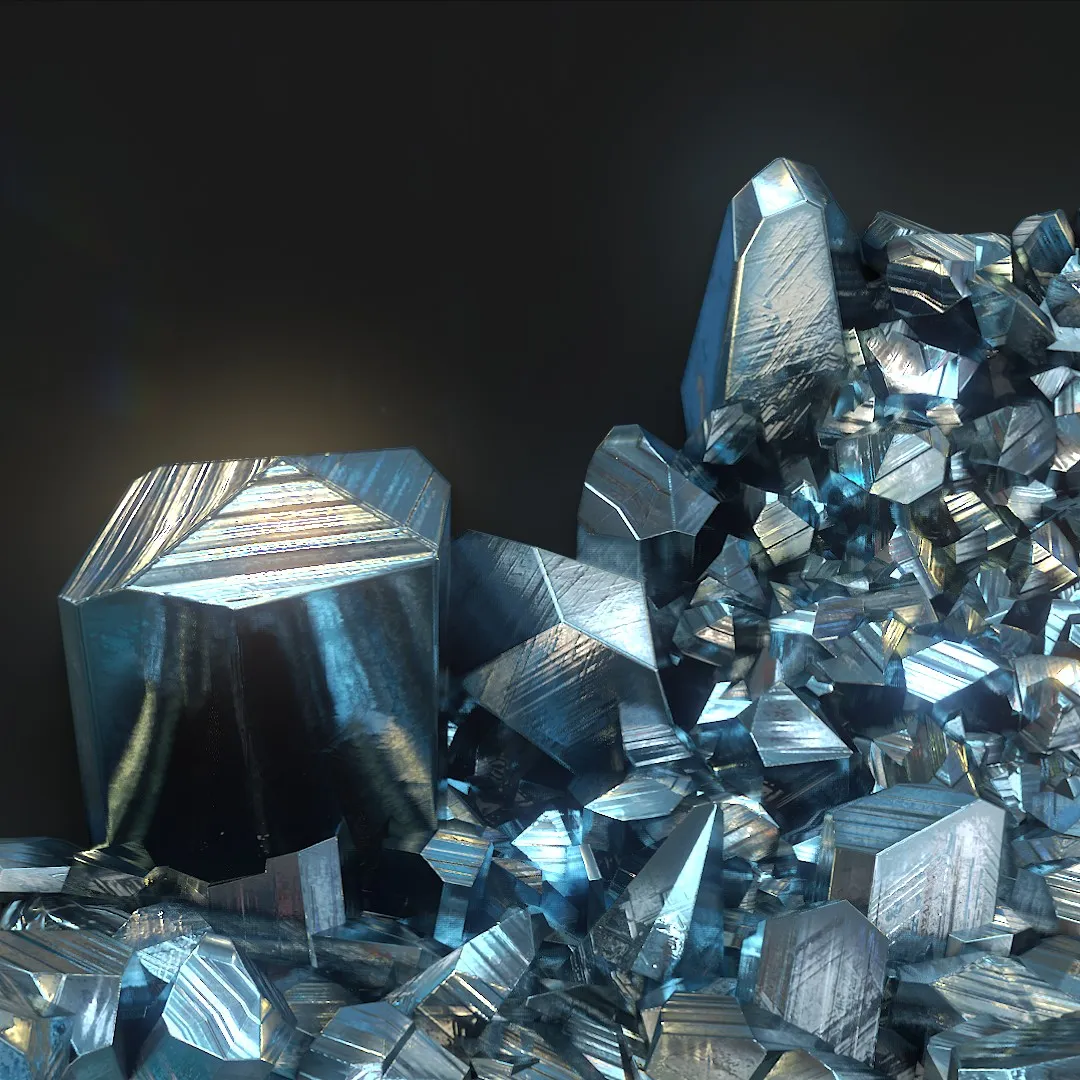
Every design of a MetaMetals commodity NFT is modeled from the real crystal, making it the digital representation of a real, specific crystal in the vault. Our 3D generalist models the crystal structure manually — not algorithmically — from the real object. Because the surface geometry comes from the real object, the 3D model shows a very similar structure. The blue shimmer is not an artistic choice but a physically reproduced property.
Design variants
The visual NFT format is designed to be flexible. Holders will be able to choose their preferred representation — each style is available as a light and a dark package. Click a variant to play the animation:
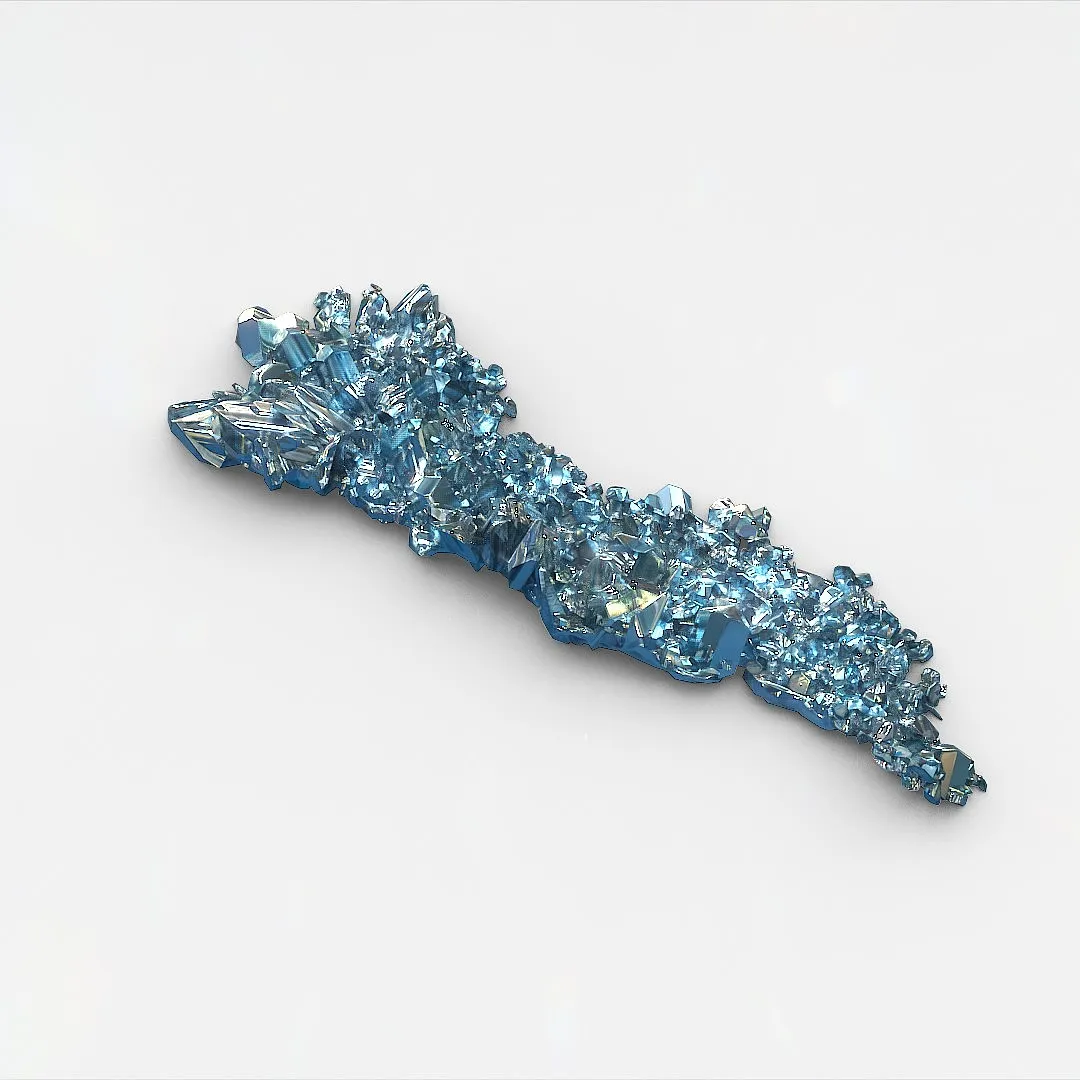
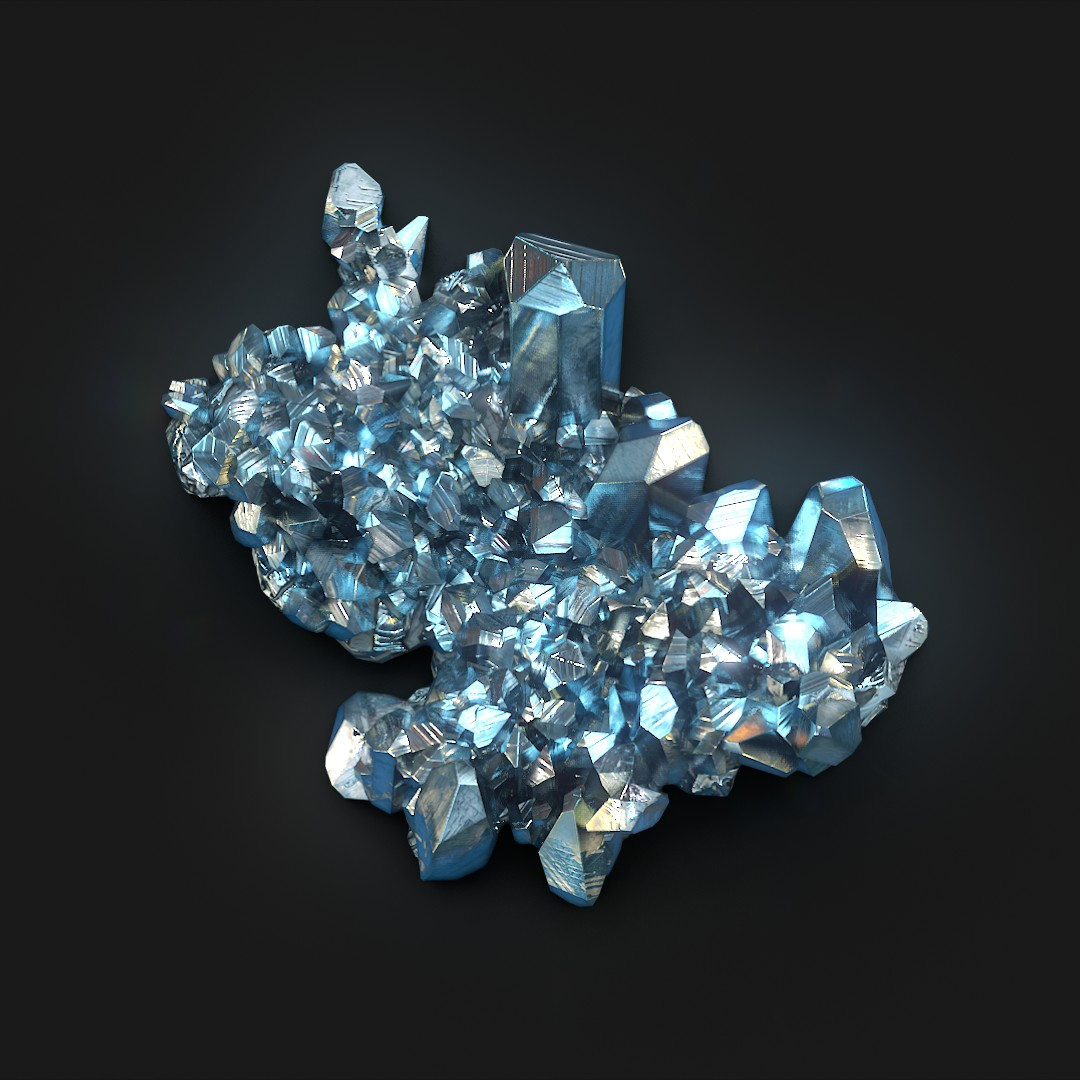
Turntable
Rotating 3D model as MP4 plus a still image of the entire crystal.
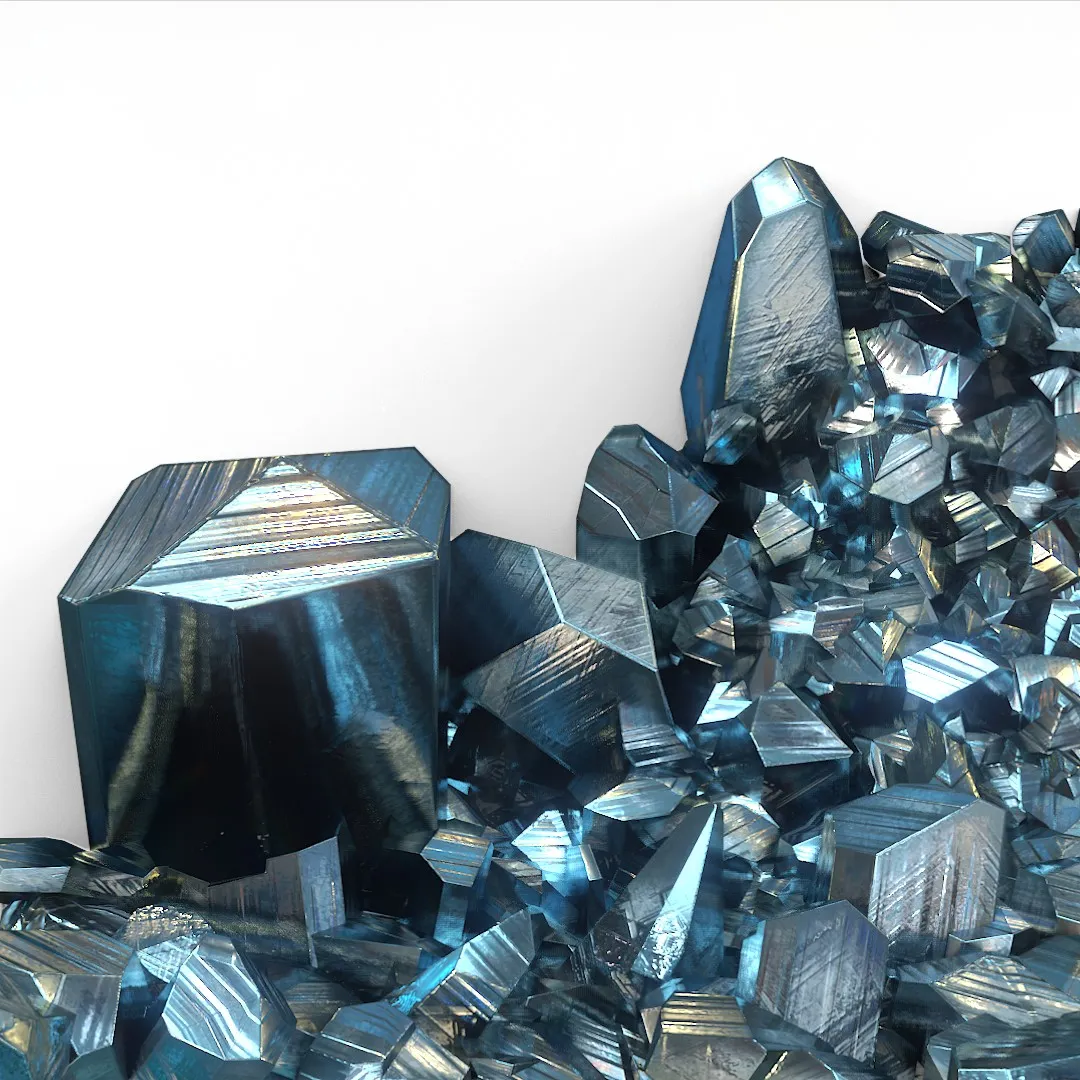
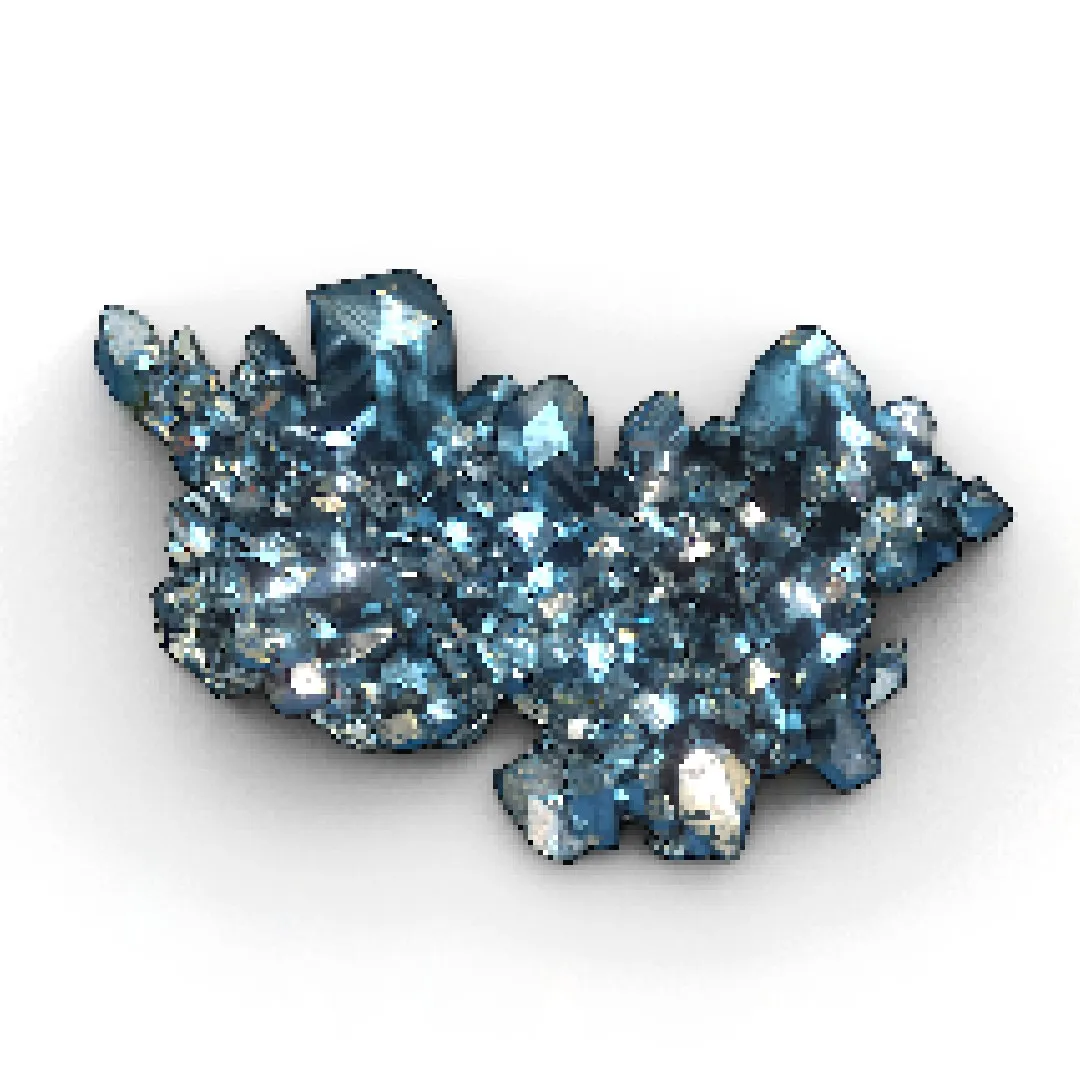
Pan
An extracted crop of the 3D model.
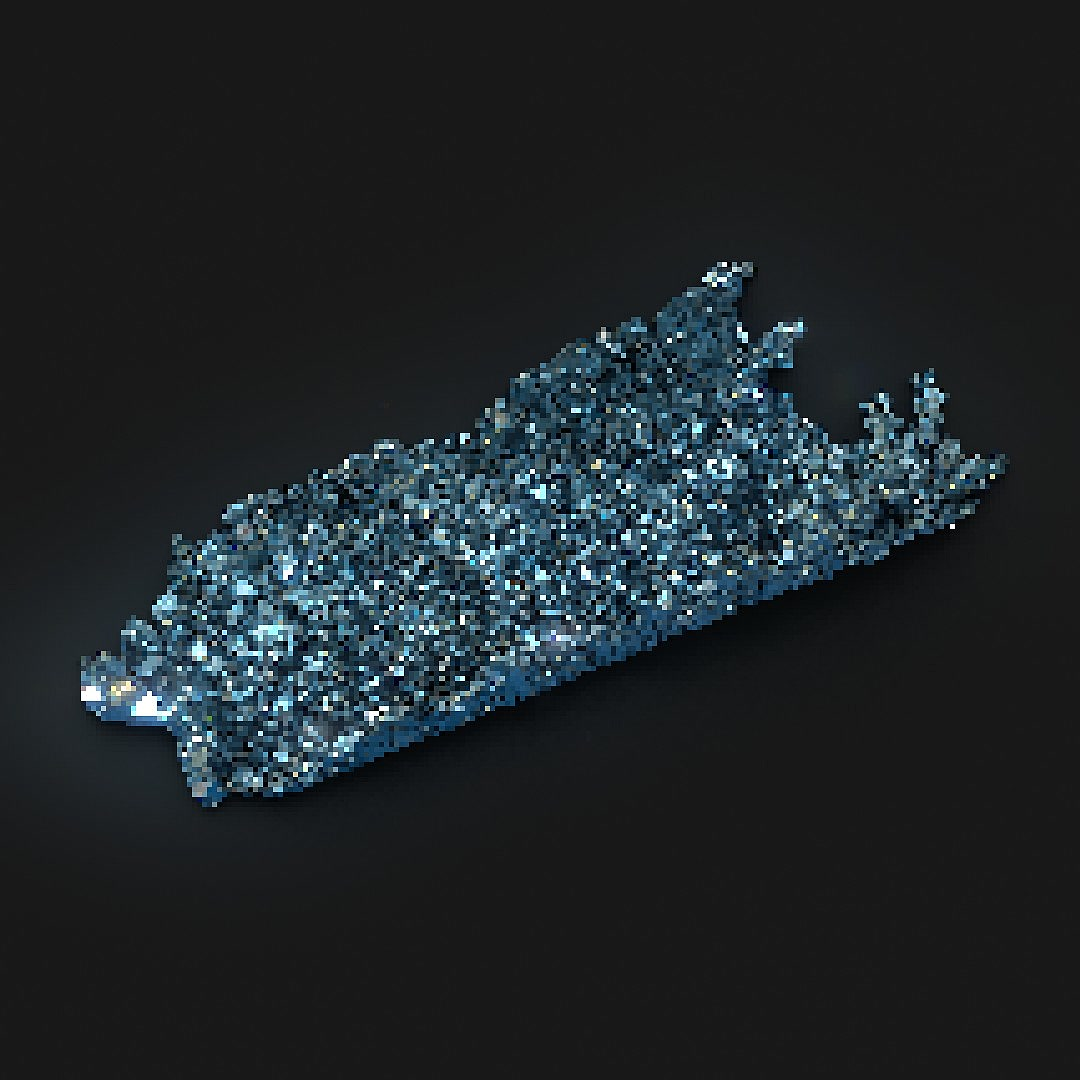
Pixel
Pixel version of the Turntable — MP4 plus still image.
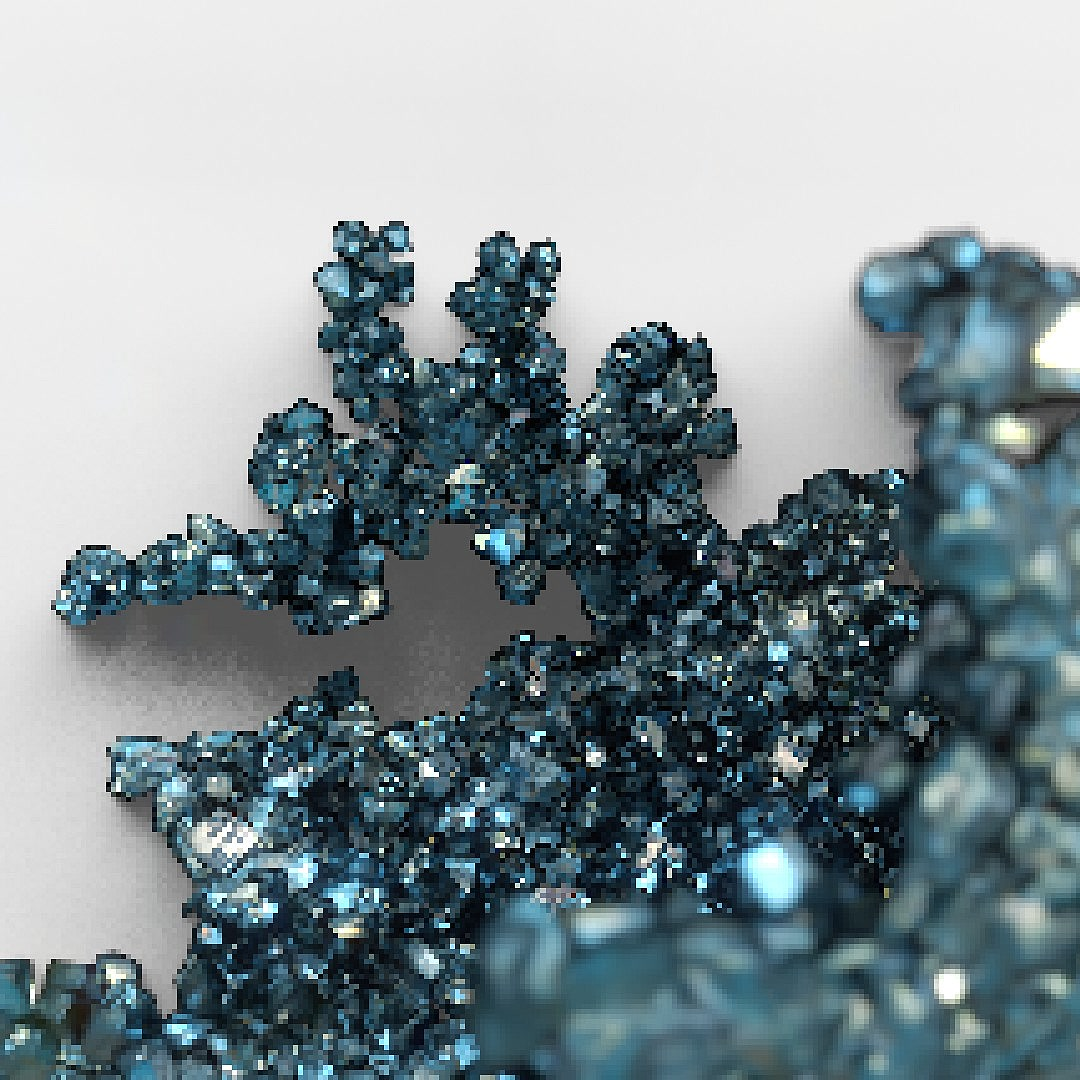
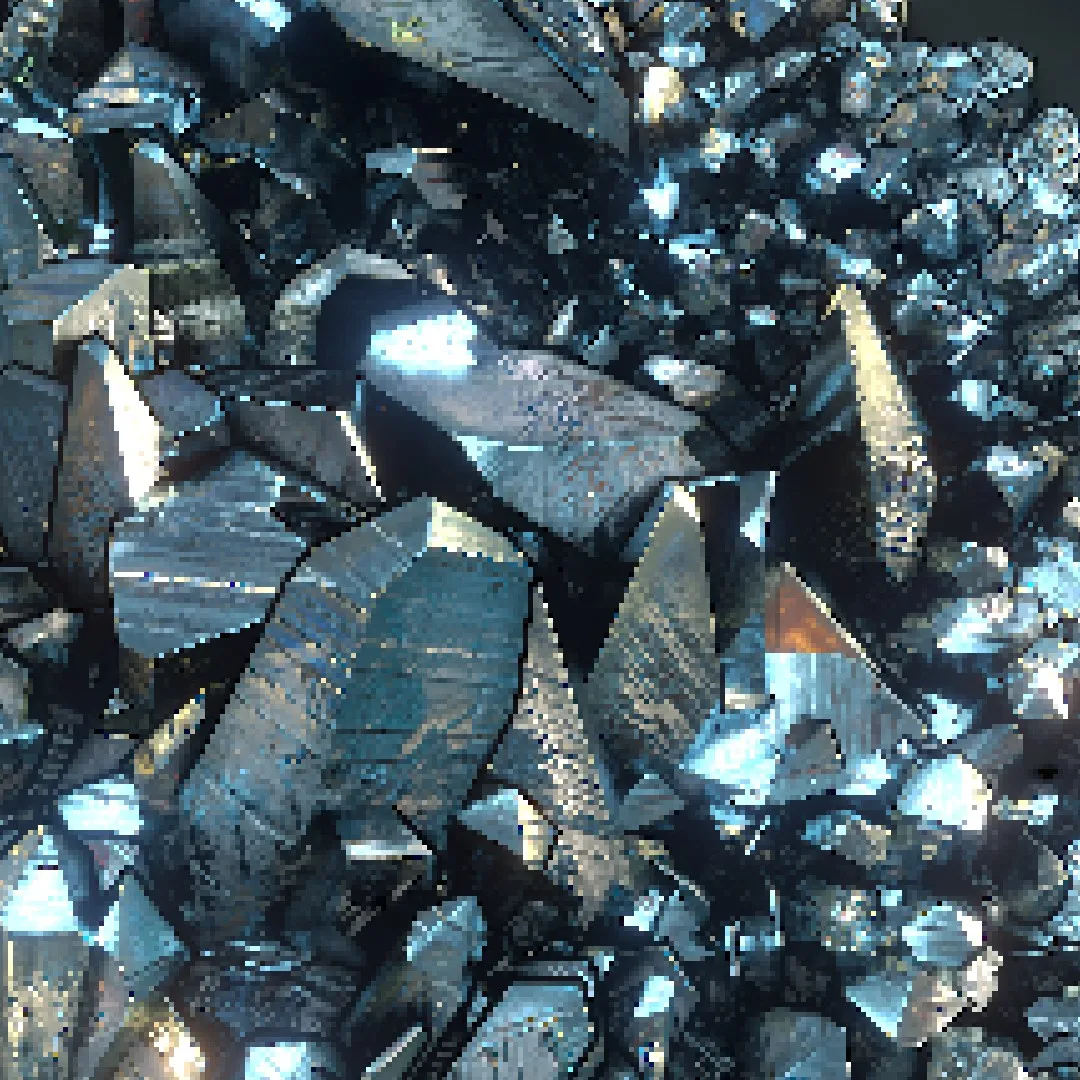
Pan Pixel
Pixel version of the Pan.
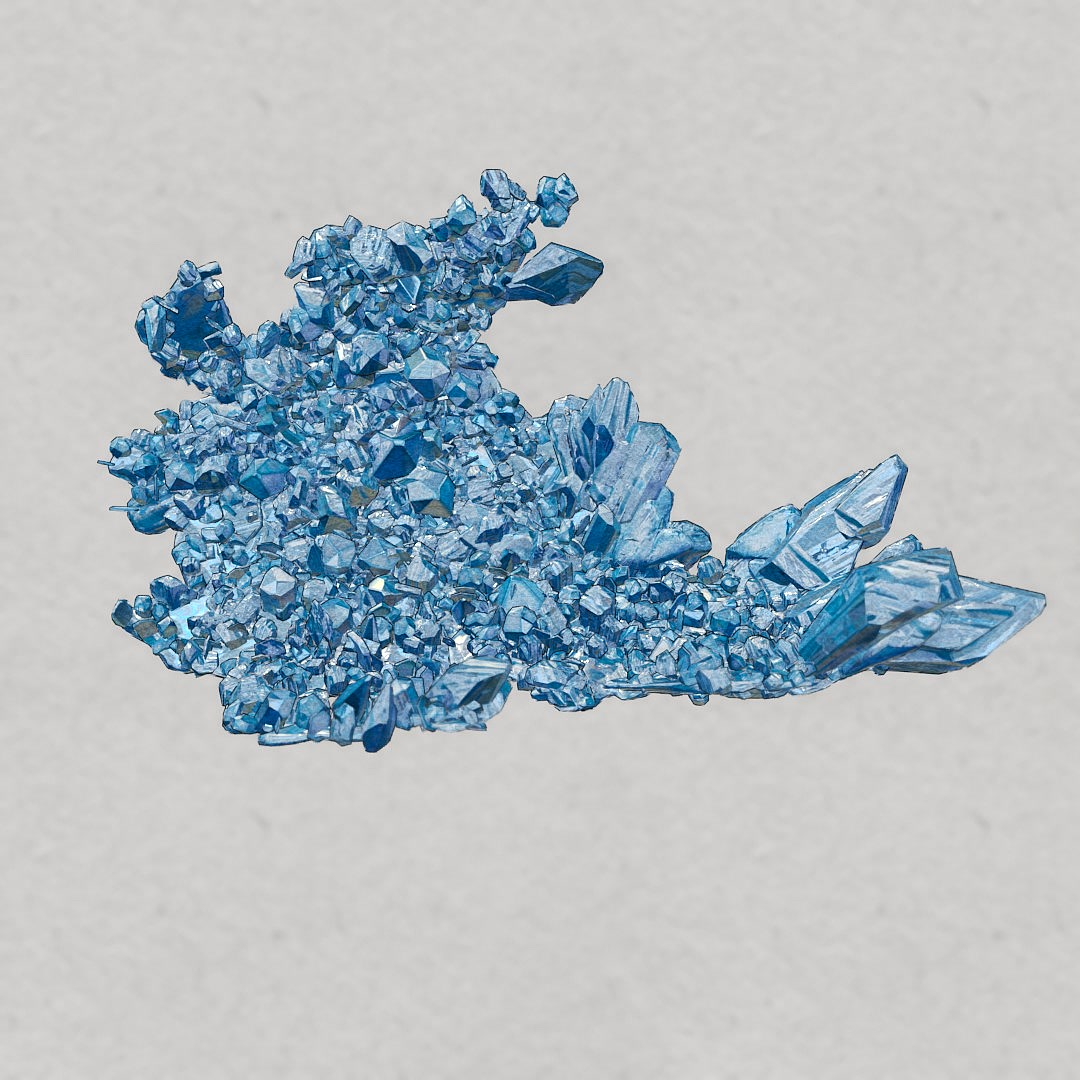
Art design
A drawn-style, standalone look.
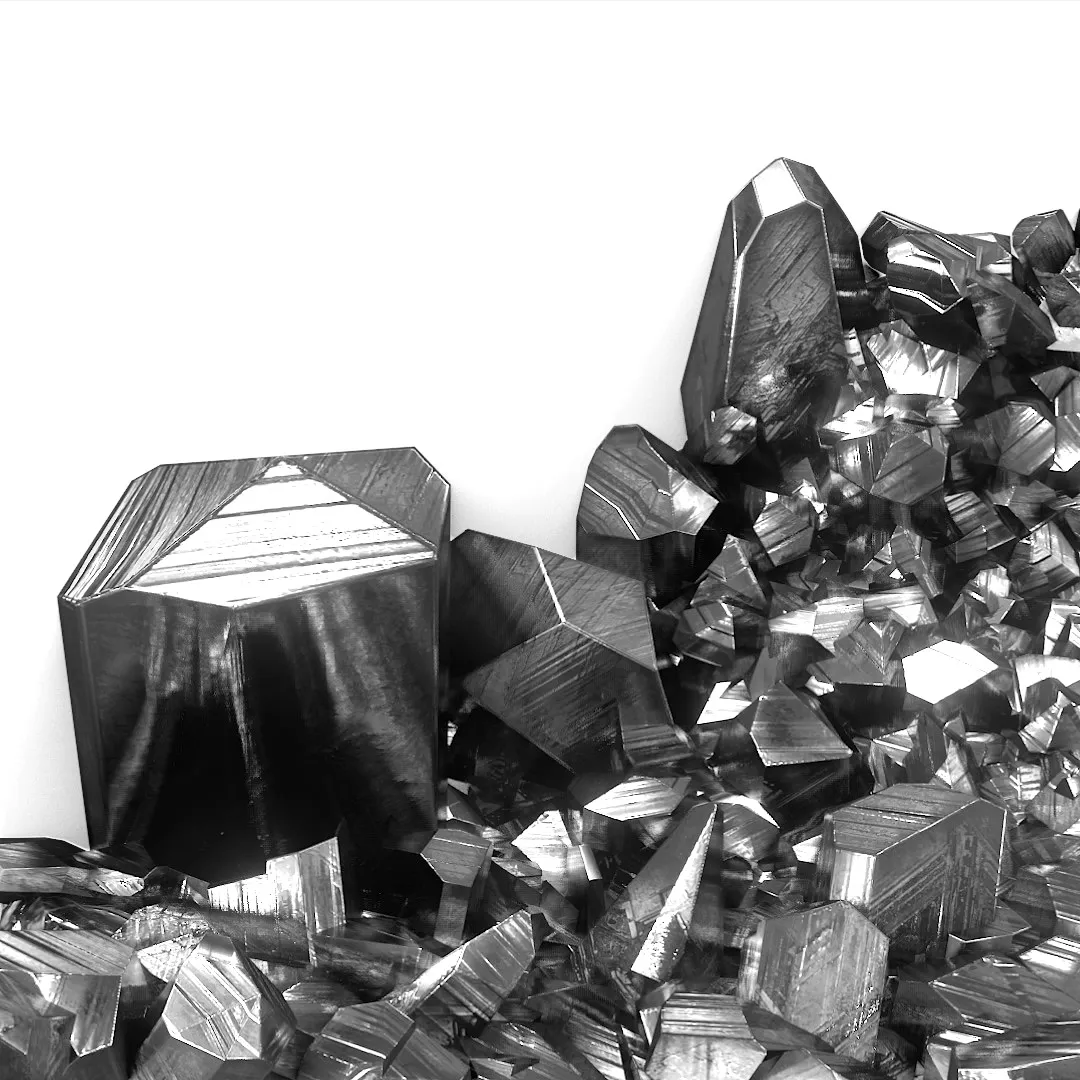
Stax design
For the display of the Ledger Stax wallet — included in every package.
To see how the variants look as a complete commodity NFT, take a look at MetaMetals Pro — and you'll find an in-depth overview per metal under NFT designs.
Development status
MetaMetals commodity NFTs are currently in development. We don't announce timelines we can't keep. Follow the progress on MetaMetals Pro or sign up for launch notifications. Here is the current status:
Smart contracts
Prototype contracts have been created on the Ethereum Sepolia testnet and can be tested in a public beta on MetaMetals Pro.
3D modeling pipeline
Established. The 3D models of several crystals have already been created by our 3D generalist. Various design types have been worked out.
Vault partnership
Under evaluation. Requirements defined — audited, insured, European location. We are also examining duty-free storage as well as on- and offboarding processes.
Compliance
The regulatory framework for tokenized precious metals is being reviewed in coordination with specialist advisors. We are aiming for MiCA licensing.
Launch timeline
No fixed date. Development updates are published on MetaMetals Pro. Functionality can be tested there.