


Osmium (Os): The Densest Element
Osmium at a glance
| Element symbol | Os |
| Atomic number | 76 |
| Density | 22.59 g/cm³ |
| Melting point | 3,033°C (3,306 K) |
| Hardness (Mohs) | 7 |
| Color |
Powder (osmium sponge): black Metallic (fusion beads): metallic, a bit bluish Sintered / polished: metallic bluish Crystalline: intensely bluish |
| Earth's crust abundance | 0.05 – 1.5 ppb (up to 80× scarcer than gold) |
| Crystal structure | Hexagonal |
| Annual production | ~1 tonne (vs. 3,000+ t gold) |
| Discovered | 1804 by Smithson Tennant |
| MetaMetals purity | ≥ 99.95% |
What is osmium?
Osmium (Os) is a chemical element with atomic number 76 and the densest naturally occurring element on Earth. A hard, bluish-white precious metal belonging to the platinum group, osmium is among the scarcest elements in Earth's crust — depending on source, up to 80 times scarcer than gold. Global annual production ranges from a few hundred kilograms to about one tonne, extracted as a byproduct of platinum and nickel mining, compared with over 3,000 tonnes of gold per year.
What color is osmium? The bluish shine explained
Osmium has a characteristic metallic bluish color — however this color depends strongly on the form and surface quality of the osmium. In powder form (the so-called "osmium sponge") osmium appears almost black, visually resembling graphite. Only with increasing purity and surface quality does the typical bluish shimmer become visible.
Osmium in different forms
| Form | Color appearance |
|---|---|
| Osmium sponge (powder) | Deep black, matte — similar to graphite powder |
| Fusion beads | Bright silvery-metallic, reflective, a bit bluish |
| Sintered osmium bars | Clearly bluish-metallic lustre |
| Mirror-polished osmium bars | Pronounced blue shine, reflective |
| Osmium crystals | Bluish-white lustre, reflective crystal sparkle reminiscent of diamonds |
The reason for the difference lies not in a different chemical composition (in all cases it is pure osmium), but in surface quality. The smoother and purer the surface, the stronger the overall light reflection. Rough surfaces or impurities scatter light diffusely, suppressing the reflection and thus the blue effect.
Why does osmium appear blue? The scientific explanation
Osmium belongs to the group of metals. As such — apart from impurities — it has no diffuse color of its own in the classical sense. The characteristic bluish color arises through selective reflectivity: not all wavelengths of visible light are reflected with equal intensity.
Osmium shows a pronounced reflection peak in the wavelength range of approximately 450 to 550 nanometers — exactly the blue and green part of the visible spectrum. Everything reflected from a polished osmium surface thus appears bluish-tinted, because these wavelengths are preferentially reflected. The color therefore comes not from the metal itself, but from the filtered reflection of the surrounding light.
This effect also explains why crystalline osmium appears much bluer than an osmium bar or nugget: the higher surface quality and the absence of roughness and impurities increase the reflectivity and thus the blue component.
Optical anisotropy: a special feature of the hexagonal crystal
Another special feature makes osmium optically interesting: the metal crystallizes in a hexagonal lattice (see properties table above) — hexagonal crystals are uniaxial and can therefore show direction-dependent reflectivity. In osmium this effect is particularly strong and measurable. The anisotropy is not really visible to the human eye, yet it is something very interesting.
Scientific finding
In a study on single-crystal osmium (Nemoshkalenko et al., 1986 [1]), the greatest optical anisotropy was measured in the wavelength range of 0.5 to 1.8 eV. At a wavelength of 823 nm (corresponding to 1.5 eV photon energy), reflectivity was measured at up to 75% in one crystal direction versus only 40% perpendicular to it.
The main anisotropy lies in the red/infrared range of light. Smaller but measurable differences persist at higher photon energies, including across the entire visible range (1.8–3.1 eV or 400–700 nm). They have no effect on the visible appearance.
Why the color effect is particularly pronounced on MetaMetals products
MetaMetals processes exclusively osmium with a purity of at least 99.95%. In combination with the surface treatment (pressed bars, crystallized structures, mirror-polished finishes) the characteristic blue shine is clearly visible. It can also serve as a visual quality indicator.
[1] jetp.ras.ru. Figure 1 on this page is a reproduction of Fig. 1b from this source.
Discovery and history
Compared with other precious metals like gold, osmium was discovered relatively late. Together with another transition metal, iridium, osmium was identified in 1804 by the British chemist Smithson Tennant after he dissolved it in aqua regia. At the time, these two metals were considered impurities in platinum.
Fun Fact: The word "osmium" (element symbol: Os) means "smell". The metal's name derives from its intense odour, which Tennant described as similar to radishes and chlorine.
What is osmium used for?
Osmium in jewelry
The fact that osmium is increasingly used by the jewelry industry to make rings, osmium necklaces and other jewelry may sound unusual at first. However, osmium has an exceptional bluish color and is far rarer than gold, silver, or platinum, making it increasingly attractive in recent years.
Osmium in industry
In industry, osmium is used above all in the form of alloys, where its extreme hardness and wear resistance are valued. Applications range from fountain pen nibs and pivots in precision instruments to electrical contacts and specialised carbide tools. Osmium-iridium alloys are used wherever ordinary metals would fail under mechanical stress.
Osmium in medicine
In biological research, osmium tetroxide has been used for decades as a standard staining agent for tissue samples in electron microscopy. In cancer research, osmium complexes have also attracted attention in recent years as potential successors to platinum-based chemotherapeutics.
Is osmium toxic?
Raw osmium in powder form (osmium sponge) is toxic because it forms volatile and harmful osmium tetroxide (OsO₄) when exposed to air. Crystalline or sintered osmium, however, is safe to handle — the crystalline surface makes oxide formation insignificant. All MetaMetals osmium products are refined and certified for safe handling.
For a detailed examination of osmium toxicity, see our dedicated article: Is osmium toxic?
Is osmium radioactive?
No. Osmium has seven naturally occurring isotopes (Os-184 through Os-192). Five of them — Os-187, Os-188, Os-189, Os-190, and Os-192 — are demonstrably stable and do not decay. The remaining two, Os-184 and Os-186, have extremely long half-lives: approximately 11 trillion and 2 quadrillion years respectively. For comparison: the universe itself is only about 13.8 billion years old — Os-186's half-life is more than one hundred thousand times longer than the age of the universe. These isotopes are therefore considered quasi-stable: theoretically radioactive, but in practice so long-lived that no measurable radiation is produced over a human lifetime.
Quasi-stability is not unique to osmium — it's a widespread phenomenon. Bismuth-209 — found in common medications (e.g. bismuth subsalicylate for stomach upset) and in lead-free solder — was classified as fully stable until 2003, when it was shown to have a half-life of 2 × 10¹⁹ years (more than a billion times the age of the universe). And potassium-40 has a half-life of 1.25 billion years and is present in every banana and every potato — without anyone suggesting these foods should be avoided as "radioactive."
Osmium therefore poses no radiation risk and can be safely worn as jewelry or held as an investment — just like other precious metals (gold, silver, platinum), which also contain quasi-stable isotopes.
Osmium forms: crystals, bars, powder and more
Osmium crystals
Osmium crystals are the form most commonly used in the jewelry industry. Crystalline osmium is formed during a crystallization process. The resulting crystal structure is exceptionally unique and features a bluish sparkle.
Osmium crystals are available in two forms: uncut (in their naturally grown form, as they emerge from the crystallization process) and cut (in precise forms for use in jewelry). Both forms are structurally unique per piece and verified with a certificate of authenticity. Details on the distinction and price differences can be found on our osmium price page.
Osmium bars
Bars of other precious metals are typically cast. Osmium bars are instead pressed (sintered). Due to osmium's extremely high melting point of 3,033°C, casting is virtually impossible — for comparison: gold melts at 1,064°C and silver at 961°C. Osmium has nearly three times the melting point of these classical precious metals. Osmium bars are a popular investment form. It is important that the osmium purchased has a high level of purity. Contaminated osmium has virtually no value for investors.
Disks, triangles, squares and cubes
Osmium is also available in geometric shapes — disks (round), triangles, squares, and cubes. These are essentially various shapes that osmium crystals are cut into, or shapes into which raw material is pressed. Here too, one should always ensure that the osmium has a high level of purity.
Fusion beads
Fusion beads are a cheaper form of osmium because they are comparatively easy to produce. They are safe to handle — the main point to watch for when buying them is purity: fusion beads are occasionally circulated with high levels of impurities (e.g. high sulfur content). Anyone looking to acquire fusion beads should therefore only buy from trusted sources.
Osmium powder (sponge) and osmium tetroxide: caution!
Raw osmium powder ("osmium sponge") is sold at very low prices online, but is highly toxic: in contact with oxygen, it forms volatile osmium tetroxide (OsO₄). Osmium sponge is black rather than steel-blue and has no value for investors. We strongly advise against purchasing it.
MetaMetals only sells osmium in safe, refined forms — pressed bars and crystals — with certification and a guaranteed purity of 99.95%.
Osmium tetroxide (OsO₄) is a compound of osmium and oxygen, available in crystalline form or as a solution from around €10 per gram. It is used as a catalyst in chemistry, has a strong radish-like odor, and is classified in a high hazard category. It is not intended for acquisition by private individuals and is not suitable for investment.
Osmium is a platinum metal
Platinum group metals are six precious metals — ruthenium, rhodium, palladium, osmium, iridium, and platinum — sharing noble-metal chemistry, catalytic activity, high density, and a silvery-white appearance. They occur almost exclusively together in the same ore deposits, usually as byproducts of nickel and copper mining.
The six are split into two subgroups: light platinum metals (Ru, Rh, Pd — 5th period) with densities near silver, and heavy platinum metals (Os, Ir, Pt — 6th period) with densities that exceed gold. Osmium holds the position of densest element within the group — and beyond it, among all naturally occurring elements — edging out iridium by a narrow margin (22.59 vs. 22.56 g/cm³).
Production and extraction of osmium
Both the production and extraction of osmium are complicated processes, partly responsible for its high price. While other precious metals such as gold or silver can be mined, the extraction of osmium goes beyond this single method. Typically, osmium is extracted from ores containing precious metals, as well as from anode slime (a byproduct of metal production).
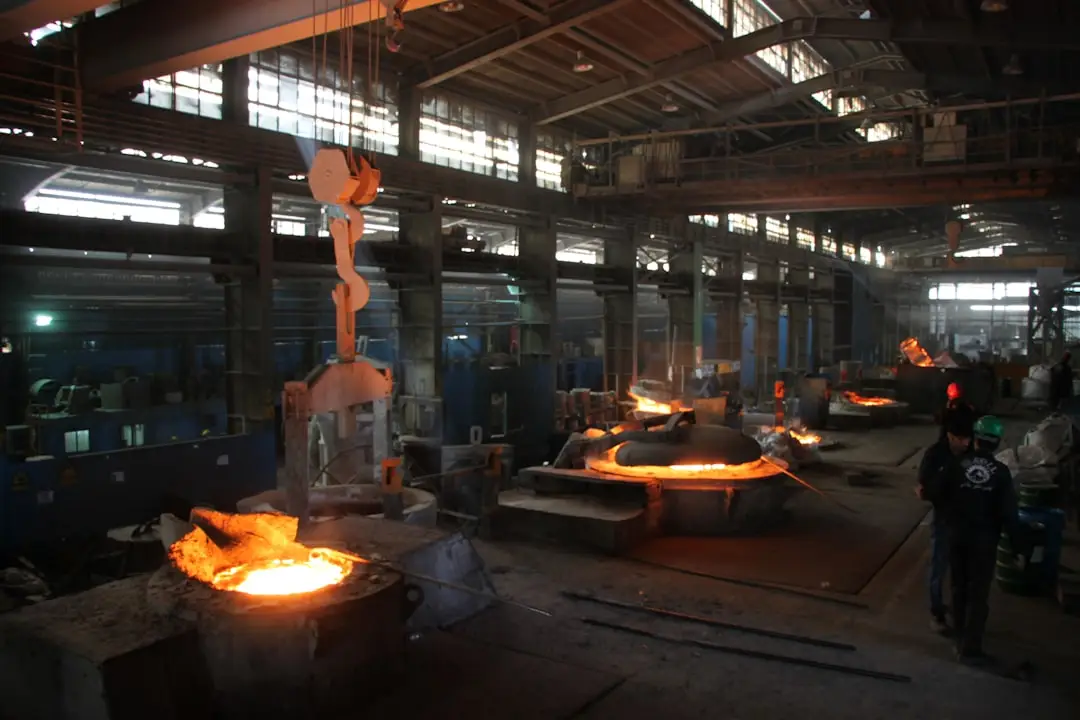
From these ores and slimes, the precious metals are separated in multiple chemical stages. The starting material is first treated with aqua regia (a mixture of hydrochloric and nitric acid): gold, palladium, and platinum dissolve, while osmium, iridium, ruthenium, and rhodium remain together with silver chloride as an insoluble residue.
From this residue, osmium is isolated by oxidative distillation. Under oxidizing conditions it forms a volatile tetroxide (OsO₄), which can be distilled off and then reduced back to metallic osmium.
A note on data sources
Published figures for several osmium properties vary substantially by source, methodology, measurement era, and degree of refinement. We therefore deliberately quote ranges rather than single values where the literature is not definitive.
Earth's crust abundance
Reputable estimates range from about 0.05 ppb (Wikipedia, continental crust, mass fraction) to around 1.5 ppb (Royal Society of Chemistry, by weight), with Britannica citing ~1 ppb. Gold's crustal abundance is approximately 4 ppb — meaning osmium is between 2.5× and 80× scarcer than gold depending on which figure is used.
Annual production
Published estimates range from a few hundred kilograms to about one tonne per year, depending on source and degree of refinement. There is no central commercial register for osmium production as exists for gold.
Melting point
Older literature often cited 2,750°C. A redetermination by Knapton, Savill and Siddall (1960) found 3,045 ± 30°C — today usually cited as 3,033°C. Some sources also report 3,127°C or 3,400°C, reflecting different measurement methods.
What makes osmium expensive?
Several properties and factors combine to make osmium one of the world's most expensive precious metals. First, osmium is extremely rare — global annual production is only about one tonne, compared with over 3,000 tonnes of gold. Second, the complex processing of all osmium drives costs high. That already starts with obtaining the raw material from ore. Additional processing like sintering or crystallization further adds to the price.
Osmium price: Is osmium or gold more expensive?
There is no blanket answer to whether osmium or gold is more expensive. It depends on the degree of purity and on the provided form. Sintered osmium bars currently cost less per gram than gold. Crystalline osmium, on the other hand, is substantially more expensive than gold.
For the current osmium price, visit our dedicated osmium price page.
Does osmium have a future?
Osmium (element: Os) is a precious metal that was discovered just over 200 years ago. This makes it one of the younger members of the periodic table, but also a metal with great future potential.
One reason why osmium has so far led a niche existence was its complicated processing. This changed only less than 10 years ago with the crystallization process, which brought osmium further into the mainstream.
It is precisely this short history that makes osmium an interesting investment for many investors.
Buying osmium — what to look for
Osmium is usually sold online by various dealers as osmium crystals or as osmium bars.
There are a few things to watch for when buying osmium. Raw osmium in powder form may seem inexpensive to the inexperienced buyer, but is highly toxic and should not be purchased in this form. It is also important to buy osmium only from trustworthy suppliers such as MetaMetals. One should definitely also pay attention to the purity of the material before a purchase.
Every MetaMetals bar and crystal ships with a unique serial number and a digitally signed PDF certificate of authenticity.
Ready to buy?
Browse our range of certified osmium bars and osmium crystals in the MetaMetals shop. All products ship with a certificate of authenticity and a guaranteed purity of 99.95%.
Find answers to the most frequent questions here.