MetaMetals tokenomics: The precious metal is the token
Why MetaMetals needs no ICO and no separate token. Commodity NFTs put precious metals and their holders at the centre. Mechanisms that create value.
The thesis: The product is the token
MetaMetals will not execute an ICO (Initial Coin Offering). There will be no fungible MetaMetals token (coin). The precious metals themselves are the tokens. Every commodity NFT is backed 1:1 by a physical precious metal held in an audited vault. The NFT derives its value from the physical asset it represents, not from speculative demand for a project-specific coin.
Explanation: Company based strategy
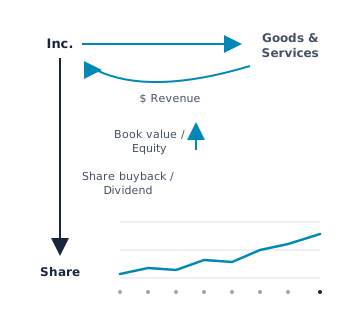
Many companies — in this case publicly listed corporations — follow a company-based investment strategy: they sell products to generate revenue. Ideally this funds further growth, strengthens the balance sheet and enables continued product improvement and innovation. For investors, it is meant to translate into rising share prices and dividend payments. This model has produced a vast number of outstanding companies that provide us with excellent products and services every day.
Turning to the problems of the ICO approach, it is worth noting that such an approach can have its own drawbacks — especially when investors are focused on short-term price performance rather than long-term product quality and customer satisfaction. In crypto, the ICO model replicates this structure: a project issues a token, raises funds, builds a treasury, develops the project, and the token price becomes the primary metric. Holders benefit from the project’s success (and ideally from product quality) through the token’s appreciation.
A key difference is that launching a coin takes very little effort — especially compared with founding a corporation or going public. This created a very permissive, unregulated environment in the early years of the blockchain industry. Many projects could raise venture capital with ease. This has both upsides and downsides. On one hand, many innovative projects and technologies would likely not exist without this approach. The flip side is a vast number of coins that were issued and led to total losses.
The Web3 space has seen its share of pump-and-dump schemes, rug pulls, projects built on empty promises, and founders who emptied ICO wallets. As described above, short-term price performance often took priority over long-term success.
There were even coins that never hid the fact that they were nothing more than a joke: “memecoins.” By now there are even projects tied to a president, or a president’s family, of a major nation, with questionable motives.
Our starting position
At MetaMetals we take a very critical view of this model. An ICO should be well considered and operate within a regulated framework that gives investors and consumers security.
As a precious metals dealer, we are in a different position from companies that manufacture consumer or utility goods, or from pure crypto projects. Precious metals sit very close to the financial market. Many regard them as excellent assets and count on their positive price performance.
We already, quite literally, hold the interesting asset in our hands — in our shop.
The contradiction of an ICO
Developing commodity NFTs is also a capital-intensive undertaking for us, but an ICO raises questions in this case. A company-based investment strategy creates contradictions here: We want to sell a tokenized real-world asset as a product we believe in. So why should we run an ICO when the asset to be tokenized is already available in the web shop? Isn’t it more rational to sell the precious metals, run a sustainable business model and transfer the corresponding benefits to the commodity NFTs, instead of setting up a separate coin?
As a precious metals dealer, this leaves us with three central questions:
What do you represent as a company if you sell a good that can genuinely be seen as a store of value — and then run an ICO on top of it?
What would you even be trying to achieve with an ICO — and is it really still about the product?
Is there a mechanism that lets customers and precious-metal investors benefit from positive price movements and puts the assets — the precious metals — at the centre?
The fragmentation problem
Beyond that, this is about a fundamental approach. Running an ICO with various promises would lead to fragmentation: one part of the investors believes in the coin — which only gains value if the company itself is placed at the centre — while another part believes in the asset itself. This can split investors’ interest. Instead of a common goal, these two interest groups can end up with two different intentions.
Our approach: Commodity NFTs
The approaches explained above don’t have to exclude each other. Nevertheless, the question arises whether there is a different approach, such as coupling the sold asset with the benefits that a crypto project usually only offers to its coin holders.
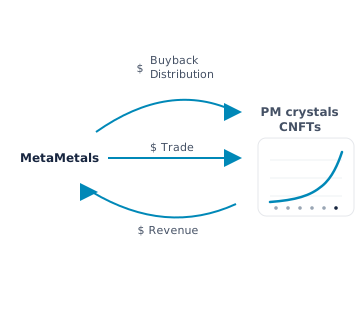
With the concept of commodity NFTs, there is now a unique opportunity to transfer all of these benefits to a digital, physically backed asset. This is what MetaMetals stands for: we bring highly rare precious metals into circulation and combine them with the advantages of tokenization.
Whoever holds a commodity NFT holds a claim on a real object with intrinsic value in a vault — not a speculative bet on the future of a project. This is what a product-based investment strategy looks like: The asset and its holder are at the centre, not an intermediary token.
Convinced by our precious metals and commodity NFTs?
Pick a crystal now and help drive development forward with us — entirely without an ICO. We put the precious metals at the centre, not coins.
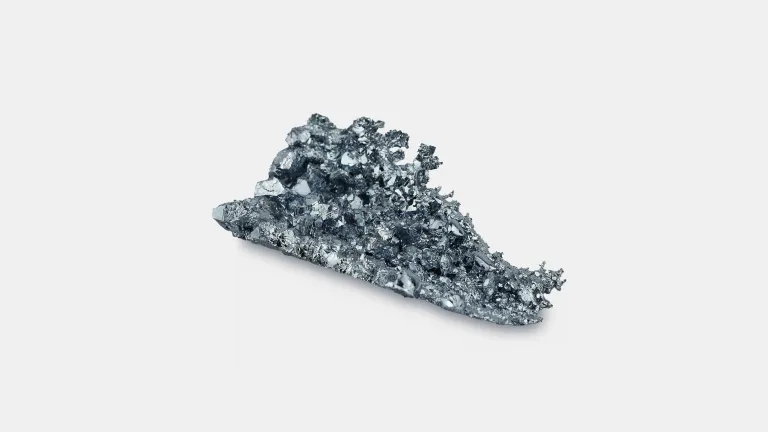 One of a kind
Osmium Crystal
~19.4 g · ≥ 99.995%
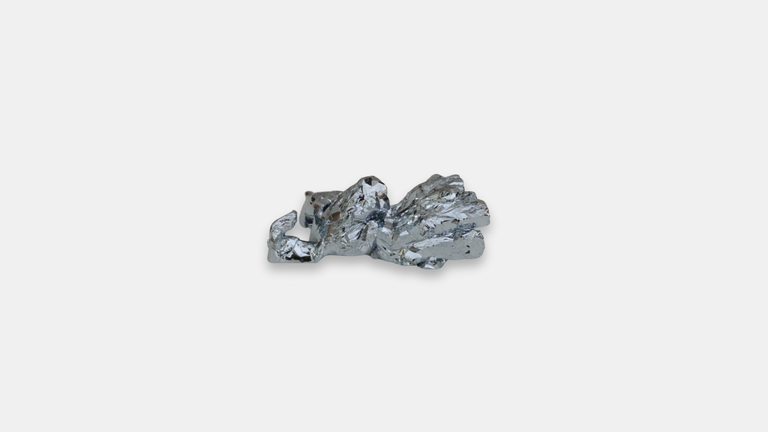 One of a kind
Osmium Crystal
~18.1 g · ≥ 99.995%
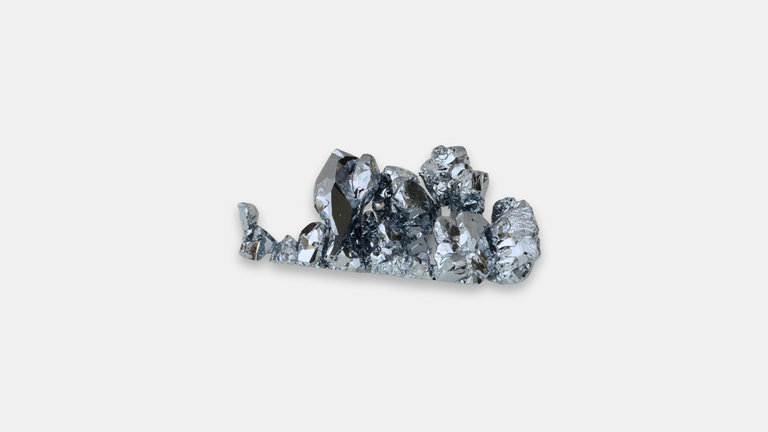 One of a kind
Osmium Crystal
~33.3 g · ≥ 99.995%
 One of a kind
Osmium Crystal
~13 g · ≥ 99.995%
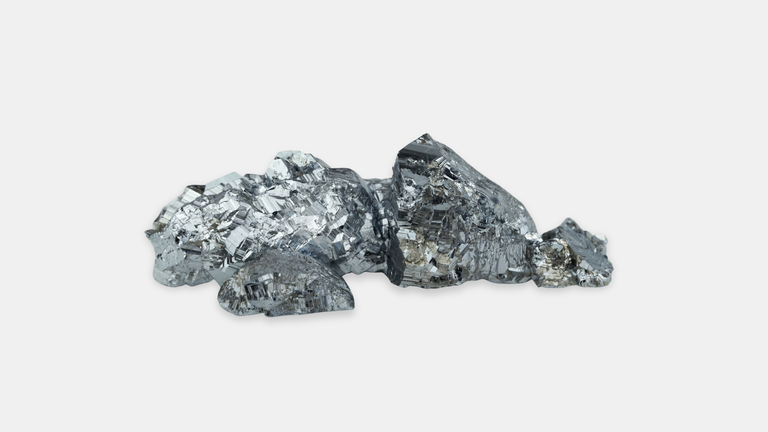 One of a kind
Osmium Crystal
~26 g · ≥ 99.995%
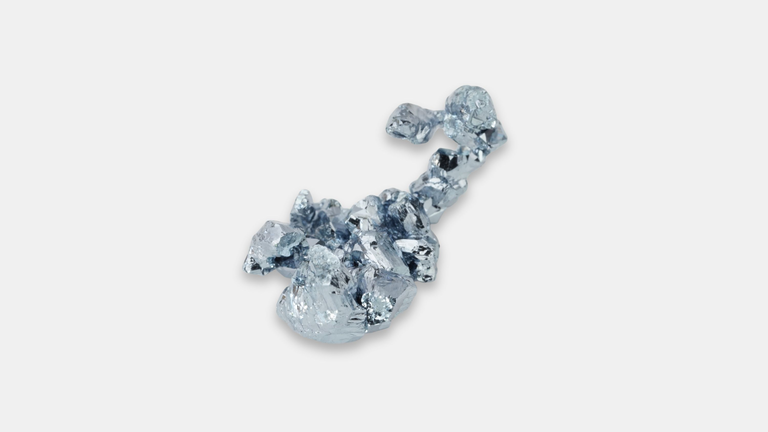 One of a kind
Osmium Crystal
~9.7 g · ≥ 99.995%
 One of a kind
Osmium Crystal
~6.5 g · ≥ 99.995%
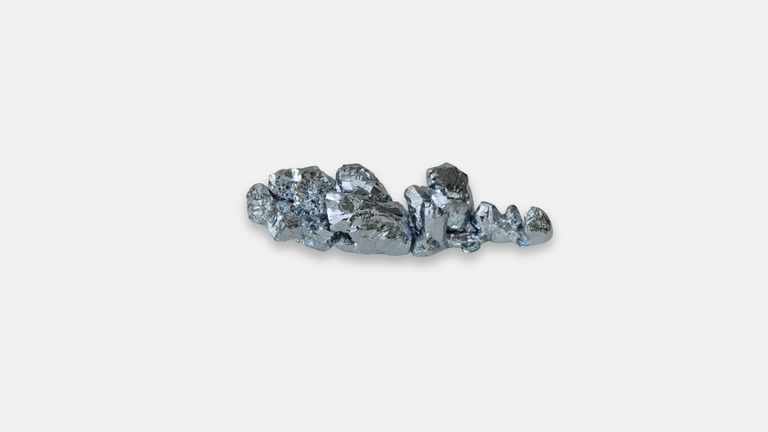 One of a kind
Osmium Crystal
~25 g · ≥ 99.995%
The token economics of MetaMetals cNFTs
The term tokenomics (a combination of “token” and “economics”) describes the entire economic model of a digital asset. It deals with the supply and demand characteristics of digital assets. These insights allow investors to make better assessments and decisions regarding digital assets.
At MetaMetals, the precious metal itself is the token. That leads to an entire economic system designed to benefit holders of the commodity NFTs directly. Our goal is to use the advantages of the blockchain ecosystem to shift the supply and demand balance further in favour of precious-metal buyers.
Mechanisms that create value
The points below give an overview. The detailed sections further down explain each mechanism with examples. As each lever is added, the balance of supply and demand shifts — and the price follows.

Precious metal crystal
Full value stackDemand clearly above supply — price follows.
Physical backing
Real crystal in the vault — intrinsic value.
Integrations
Broad presence across various trading platforms.
Treasury building
Distributions, free storage periods, crystal buybacks.
Exclusive access
Priority access to new crystals and editions.
On-chain ecosystem
Use as collateral in DeFi lending protocols and as an in-game asset.
Governance & DAO
Voting rights from physical weight — a say as added value.
Illustrative depiction of the relationship between value mechanisms, demand and price. Not a forecast, not a promise of returns.
Rare platinum-group metals as the foundation

Highly rare platinum-group metals form the foundation of the commodity NFTs. They are among the elements with the lowest abundance numbers in the Earth’s crust. The complex extraction and refining of osmium, iridium and rhodium means that the annual quantity that can actually be mined and processed is a further step toward limited supply. Industrial demand gives the raw materials a price floor.
Crystallized precious metals as a rarity factor

The crystallization process adds a further step to the value chain that sharply limits the supply of potentially available tokens even before tokenization. Precious-metal crystallization is highly sensitive and proceeds very slowly. It can take months to achieve a satisfactory result. The smallest changes can cause crystallization to fail. Crystals suitable for jewelry are rarer still. Everything has to be right. Some crystals that are tokenized are also suitable for further processing into jewelry, which raises the value basis further. A nice animation illustrating the process can be found here.
Is economic activity actually a struggle against entropy (the physical measure of disorder)? From skyscrapers to microchips, human progress is the story of how we use energy to create order that nature would never produce on its own.
Gold has always been part of this story: We expend energy to free scattered atoms from the earth and condense them into something ordered and enduring. Crystallized precious metals take this idea a step further. Crystallization means higher purity, greater order and a form that is even more improbable in nature.
This does not mean that the amount of precious metal contained in a crystal increases due to crystallization. The pure quantity of raw material is present in highly refined form, and that carries intrinsic value. Anyone whose priority is the most quantity per euro or dollar is probably better served by precious-metal bars. We intend to tokenize bars in a second step, since we are prioritizing the crystals. Read more on our page about precious-metal crystallization.
Treasury building
MetaMetals already puts much effort into developing infrastructure by using our own funds. Development can proceed faster with generated profits. They can also be utilized to finance programs that give commodity-NFT holders further benefits. That could be as an example crystal buybacks, in which MetaMetals repurchases crystals for trading, jewelry production or B2B orders and gives holders priority. This could take place through direct trading or through participation in auctions. In that case, more liquidity would flow back into the system to achieve more stable prices. Other examples could be time periods with reduced or free storage fees, lowered onboarding fees and additional free designs for holders.
This core idea can also lead to the creation of a treasury. MetaMetals could contribute a fixed percentage of generated profit into a treasury. This treasury is not a speculative fund and not a promise of returns — it is a capital base fed by the actual value created in the ecosystem. It can be used specifically for the benefit of holders rather than flowing away for other purposes. The advantage would be that the benefits already described could be carried out more directly, more predictably and more transparently. A further idea would be direct distributions to commodity-NFT holders, e.g. though direct payouts. However direct payouts would require additional regulatory review. A treasury can even be combined with governance decisions (see the “Governance & DAO” point): cNFT holders can be given a direct say in decision-making through on-chain voting.
Such programs are funded from the revenue that arises along the entire lifecycle of a commodity NFT — not from speculation, but from real activity. Product sales (precious-metal crystals, bars, jewelry) are already active today and support everything else. As an asset moves through the ecosystem, independent streams are added: Fees from on- and offboarding, storage fees, the sale of additional design packages, and trading fees.
Governance & DAO
Commodity NFTs can be more than a proof of ownership: They can carry voting rights in a DAO (Decentralized Autonomous Organization), directly involving the community in ecosystem decisions. Voting weight can be tied to the properties of the underlying physical asset. This participation is itself a form of added value: Holders help shape the direction rather than standing on the sideline observing the project. In addition to that holders have more interest in holding and owning the asset, since they’d lose voting rights selling it.
Integrations and on-chain ecosystem
A NFT is a standardized token on Ethereum. Due to that they can interact with the broader on-chain ecosystem. Since commodity NFTs are based on that standard they could be integrated and on established NFT marketplaces. The usage as collateral in DeFi and lending protocols is also possible. This unlocks more liquidity and leads to greater recognition within the blockchain sector. A previously illiquid precious metal is able to become a mobile, programmable building block. That’s the true strength the blockchain transfers to tokenized assets.
Tokenized assets also offer integrations and usage in sectors which are fond of digitalization. One example are e-sports trophies, where a real, crystallized precious metal can be handed over in digital form as a prize at events. Winners can hold the cNFT, exchange it for the physical object, or liquidate it to receive part of the prize money directly. Such integrations open up new use cases for MetaMetals products. They also create additional demand for the underlying metal.
Exclusive access
Holders can receive priority access to offerings, e.g. access to the iridium crystallization NFTs, to limited editions, or to further product innovation. In this way, holding a commodity NFT itself becomes a ticket into a more exclusive group.
This article is for informational purposes only and it is not investment advice or a recommendation to buy physical or digital assets. MetaMetals is a precious metals dealer, not a financial advisor. There is no guarantee for the accuracy or completeness of the information and opinions presented. Forward-looking statements are uncertain, and the prices of both physical and digital assets can fluctuate. Past performance is no indicator for future results. Features and offerings presented are in development. There is no guarantee that they will be completed or become available in the form described.
Frequently asked questions
The mainnet chain is Ethereum. We are already testing our smart contracts on the Ethereum Sepolia testnet.
No. There is no separate MetaMetals token and there won’t be an ICO. The commodity NFTs themselves are the economic layer of the ecosystem — every NFT is backed 1:1 by a physical precious metal.
Not yet. DeFi integration is a planned design goal and depends on the cNFT launch being operational first. The aim is for commodity NFTs to be accepted as collateral on lending platforms — their physical backing makes them a strong type of collateral.
Yes — in a sense. Precious-metal crystals with a minimum weight of 5g purchased from MetaMetals today are eligible for onboarding after the commodity-NFT platform launches.
No fixed date. Smart-contract development is in progress. We do not announce timelines we cannot keep. Development updates on MetaMetals Pro.
Join the MetaMetals Discord, or contact us by email or social media. Links are available on the website. Community members are welcome at every stage.
A DAO based on commodity-NFT governance is a vision. Building governance on the basis of physically backed tokens is a complex process. Community input will help shape the design.
Don’t miss the Pro launch
Updates on commodity NFTs and tokenized precious metals — straight to your inbox.
One of a kind
Osmium Crystal
~19.4 g · ≥ 99.995%
One of a kind
Osmium Crystal
~18.1 g · ≥ 99.995%
One of a kind
Osmium Crystal
~33.3 g · ≥ 99.995%
One of a kind
Osmium Crystal
~13 g · ≥ 99.995%
One of a kind
Osmium Crystal
~26 g · ≥ 99.995%
One of a kind
Osmium Crystal
~9.7 g · ≥ 99.995%
One of a kind
Osmium Crystal
~6.5 g · ≥ 99.995%
One of a kind
Osmium Crystal
~25 g · ≥ 99.995%