Watches
Most precious metal in watchmaking is alloy — 18-karat gold means that there is a quarter not gold in it. The dials of a Maximilian James watch are cut from a solid block of a single unalloyed element: osmium, ruthenium or tantalum, produced and certified by MetaMetals, then hand-ground one at a time by Maximilian James in Bavaria.
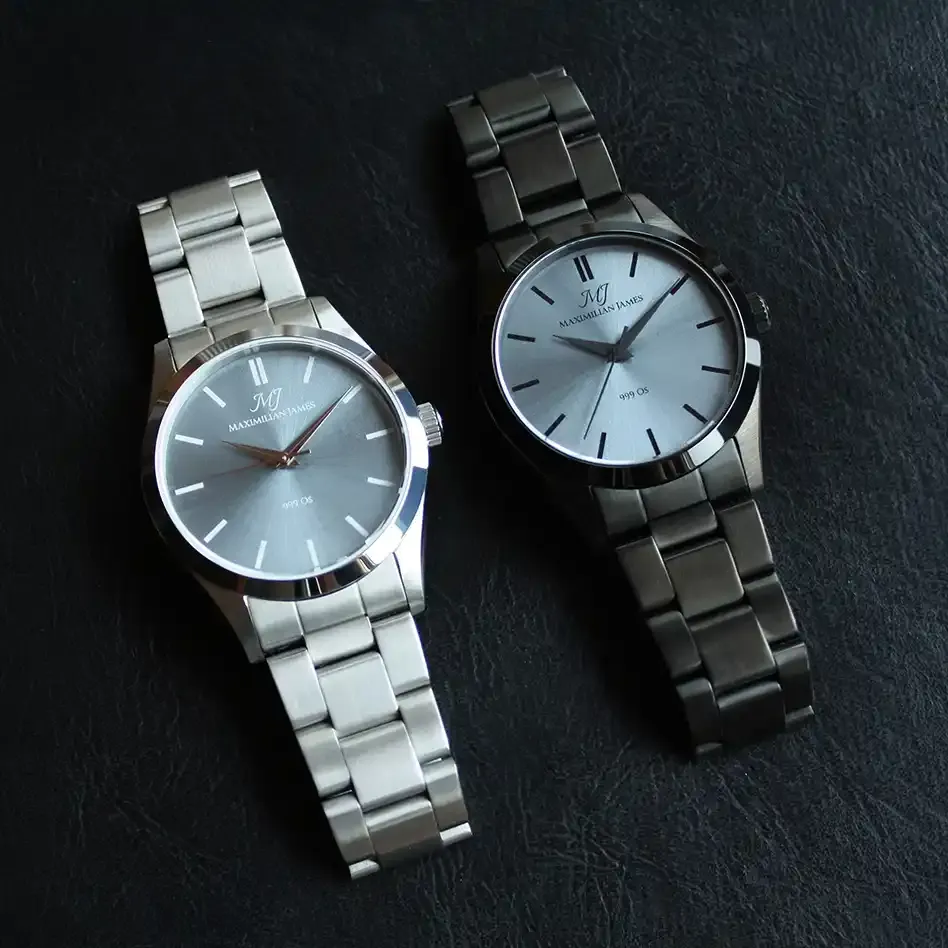
MJ Osmium Watch
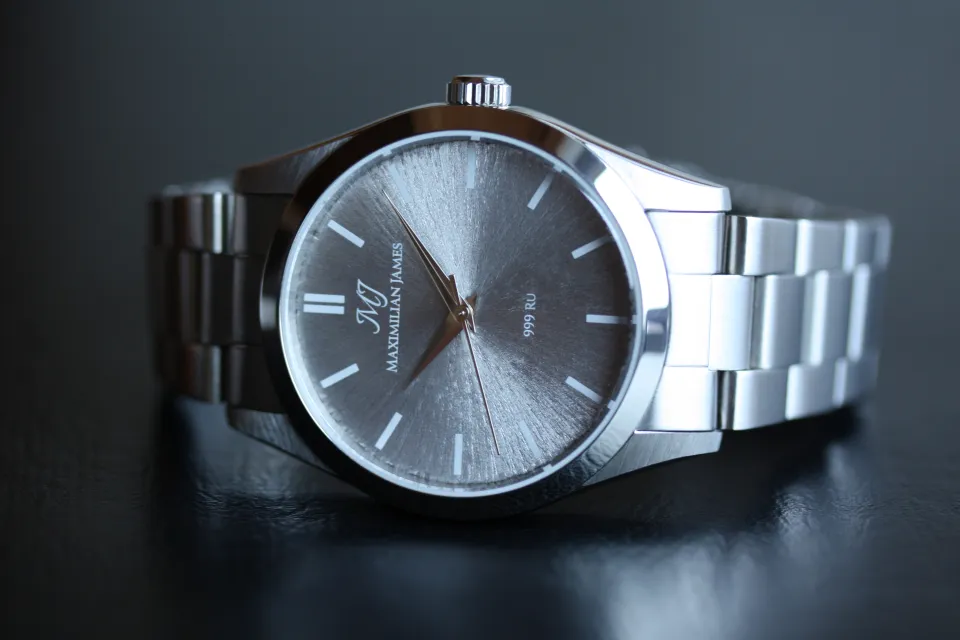
MJ Ruthenium Watch
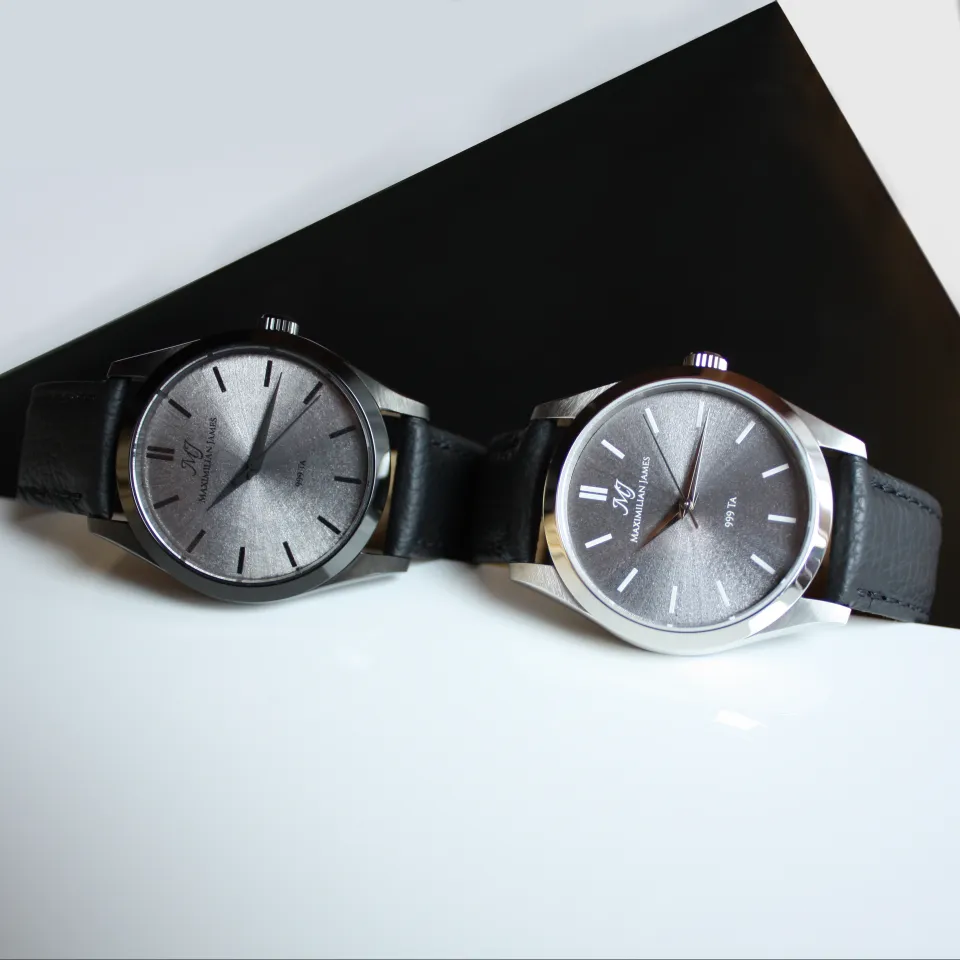
MJ Tantalum Watch
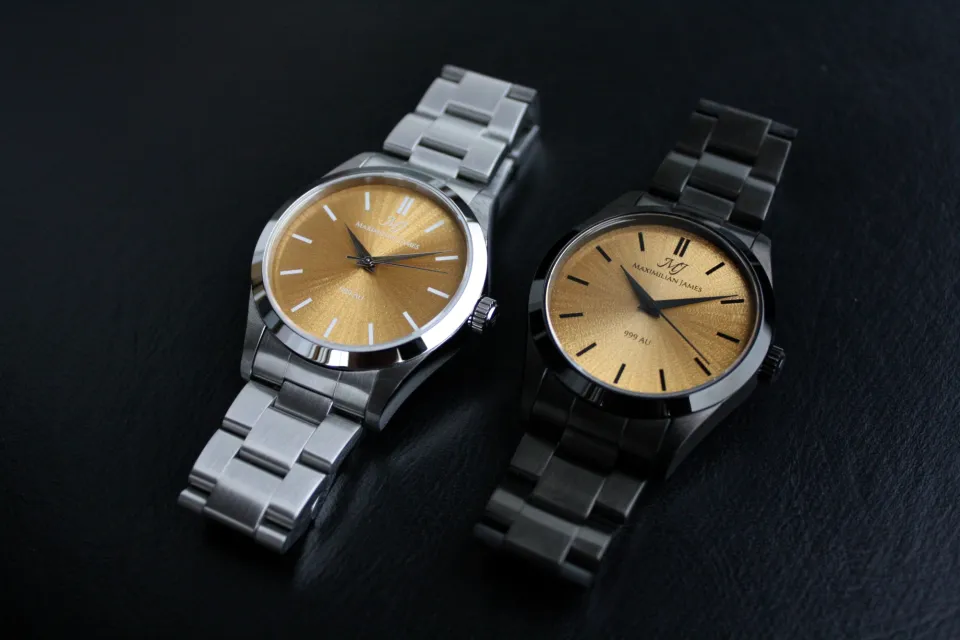
MJ Gold Watch
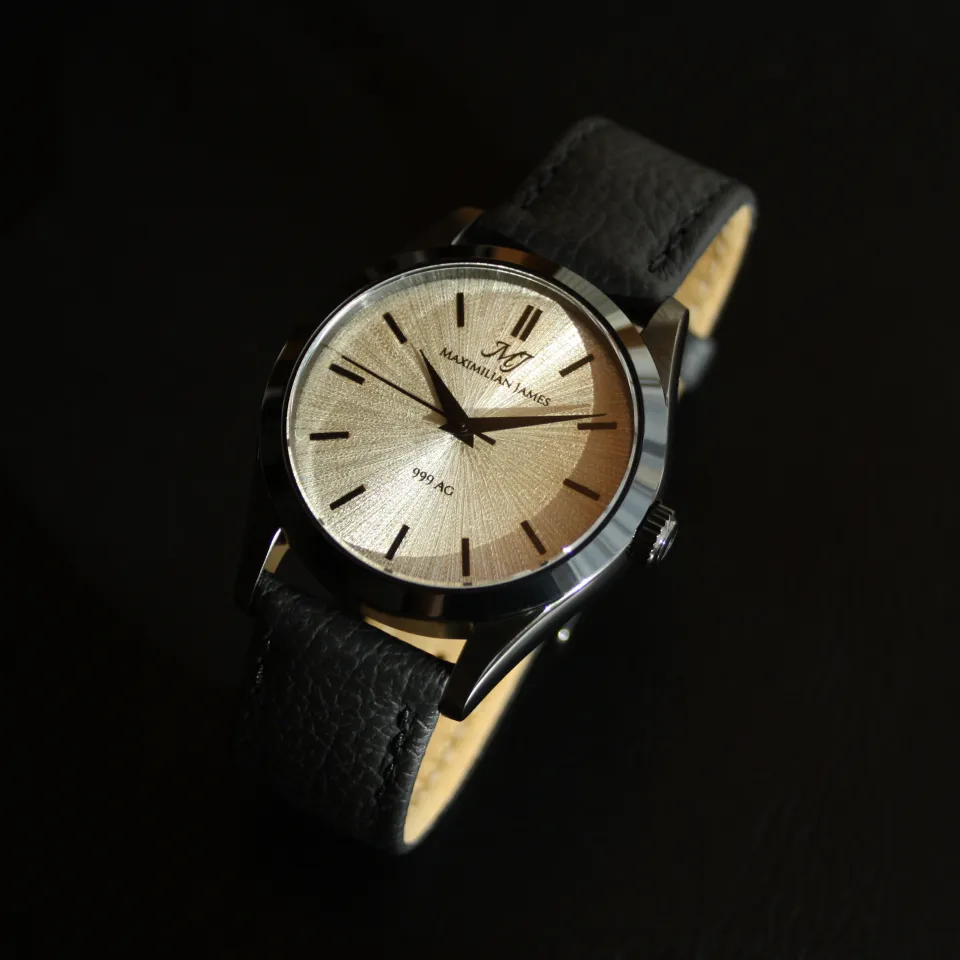
MJ Silver Watch
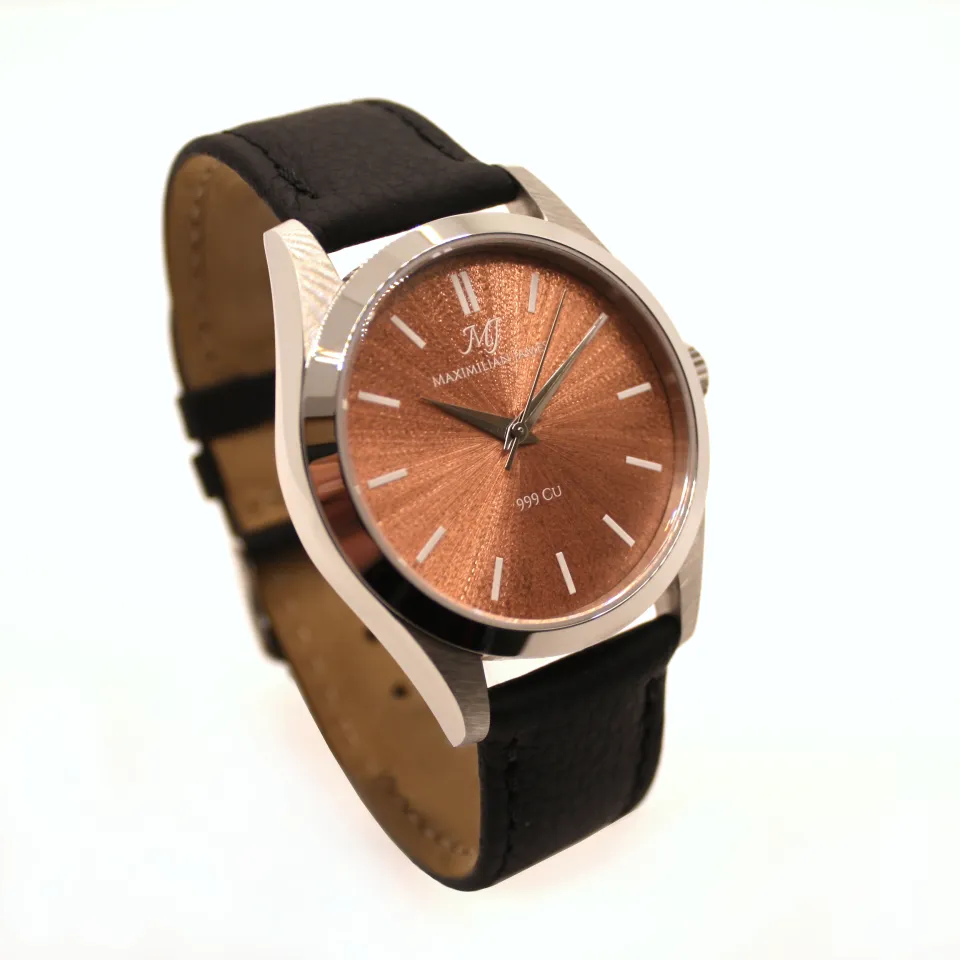
MJ Copper Watch
Order the osmium model directly
The osmium dial watch is configurable and in stock: choose case finish and strap, and it ships insured worldwide with both certificates included.
Configure your watchRequest a specific dial
Many of the MJ watches and their dials are produced on demand. Just contact Maximilian and he'll take care of the rest. Other elements can also be requested.
Start a conversationWhat makes these watches different
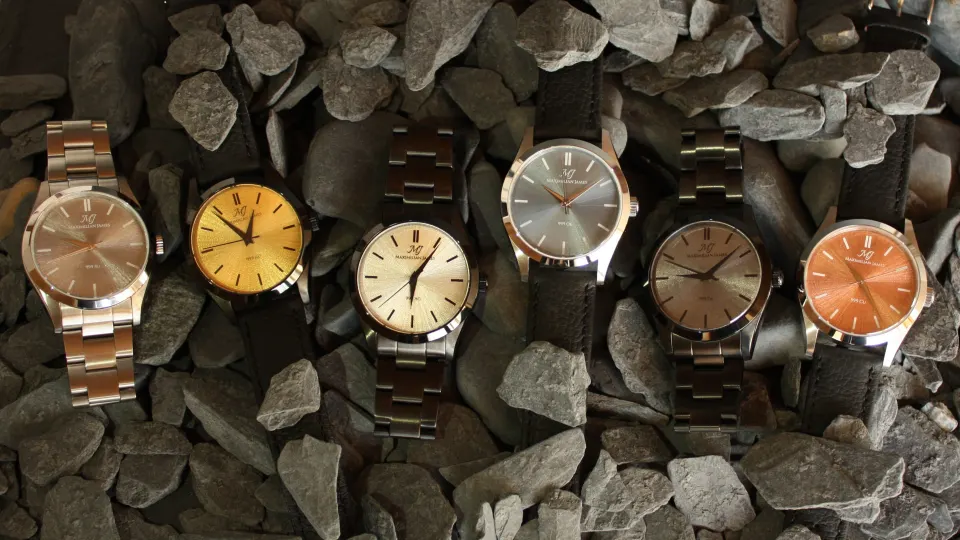
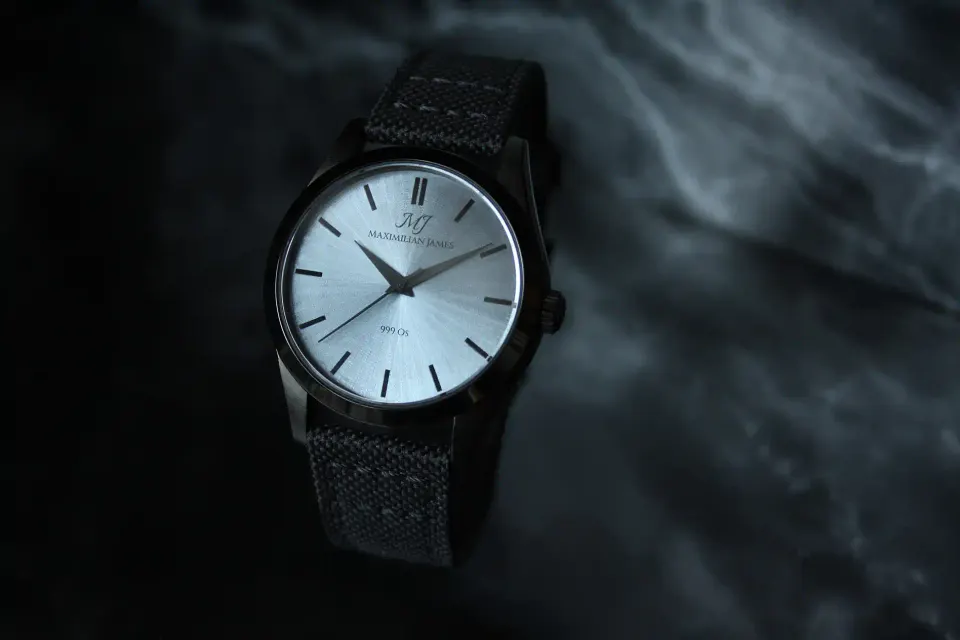
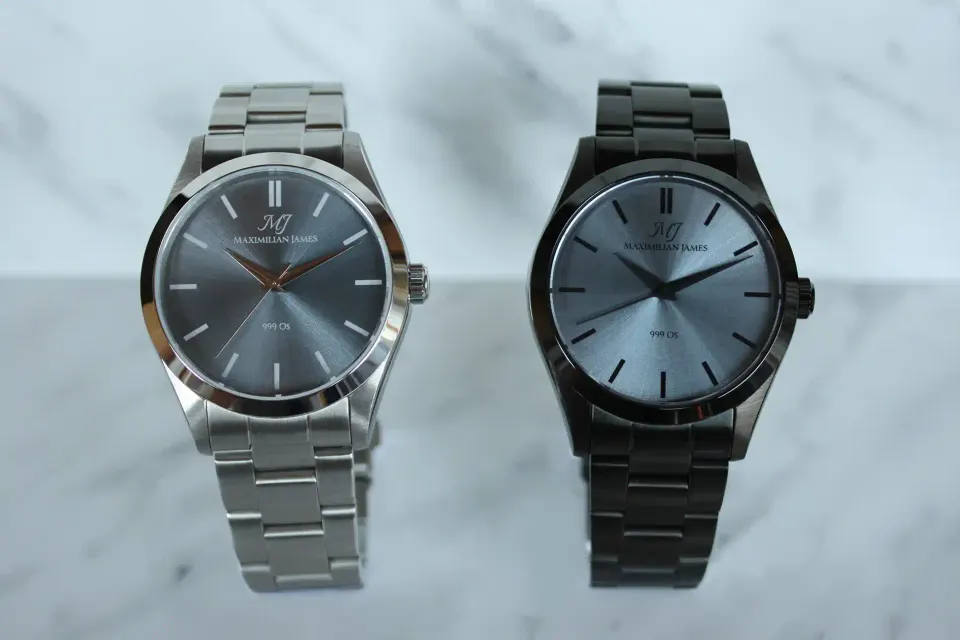
Not the case, not the movement — both are conventionally excellent. The difference is a 0.7 millimetre disc of metal that nobody had managed to make before.
How a dial is made
Five stages across several workshops. The first one differs by metal — osmium and ruthenium take a route which differs from the others.
Processing the raw material
Every dial begins as a block of a single unalloyed element, and the process that makes that block depends on the metal. Osmium and ruthenium cannot be melted and cast, so their powder is sintered — pressed under extreme pressure at high temperature, oxygen-free, into a dense and pore-free solid. Tantalum, gold, silver and copper are rolled to thickness instead.
Who makes them
Made with Maximilian James
MetaMetals produces and certifies the dial. Maximilian James makes it worth admiring. The dial is the part of a watch nobody usually thinks much about. Here it is the centre piece.

Murnau am Staffelsee, Germany
Maximilian James George
It took six to seven years to get from an inherited family watch to a solid osmium dial that survived being cut and ground. Ask which watch he wears and the answer is the silver one, every day. His personal osmium dial watch comes out for occasions. Getting there took many years and six fractured blanks — four during grinding and another two during assembly. He still grinds every dial himself. His passion keeps him going and led to watches that display the uniqueness of elements.
Meet Maximilian JamesFAQ
Find answers to the most frequent questions here.
Yes. Case finish and strap are configurable on the osmium model, and beyond that the dial metal, the case engraving and the rotor engraving can all be discussed. An osmium dial can usually not be fitted into a watch you already own, since the dial normally doesn't fit. But if you'd be interested if it's possible, just ask Maximilian.
Six as standard: osmium, ruthenium, tantalum, gold, silver and copper. All of them are unalloyed, and all of them are certified by us. In principle almost any element can be attempted — some behave far better than others. Maximilian James on what would make the list:
"There are some metals I'm looking at. I would love to try chromium. It would be very vibrant and would add a different kind of look. Platinum is one in the precious metals sector which I'd like to try too."
Maximilian James, MJ Watches, August 2026
Yes. His watches are sold directly over his shop. Maximilian James processes international orders, all communication can happen online or by phone.
Each watch carries a serial number engraved on the rotor and is certified by Maximilian James. In addition to that it ships with a digitally signed certificate of authenticity of MetaMetals documenting the metal's purity, weight and serial. That makes private resale straightforward.
MetaMetals is also developing a marketplace. That makes the resale of MetaMetals products possible. We plan to make this benefit for Maximilian James watches accessible as well, which would make the resale of an MJ watch additionally comfortable.
Why unalloyed, and why more than one metal
In jewellery and watchmaking, precious metals almost always appear as alloys — because they have to be made harder or softer before they can be worked. These dials exist for four reasons.
You are looking at the real metal
An alloyed metal gives you a falsified picture of the element: adjusted for colour, adjusted for hardness, and then sold under the name of whichever metal makes up the majority of it. An MJ watch with a certified MetaMetals dial shows the element as it actually is.
It holds inherent value
An unalloyed dial carries a real material value that an alloyed one largely does not. On resale, a dial certified at 99.95% is a different proposition from one that is alloyed with lesser metals for hardness. That value varies widely across the different dial metals but the purity does not.
The fascination itself
Behind all of it is an older interest: What these elements are, how they came to exist at all, and how far they can be worked without being turned into something else. A dial is one of the few objects where someone looks at that material several times a day.
That interest is what brought MetaMetals and Maximilian James together in the first place. How the collaboration started →
Every element looks different
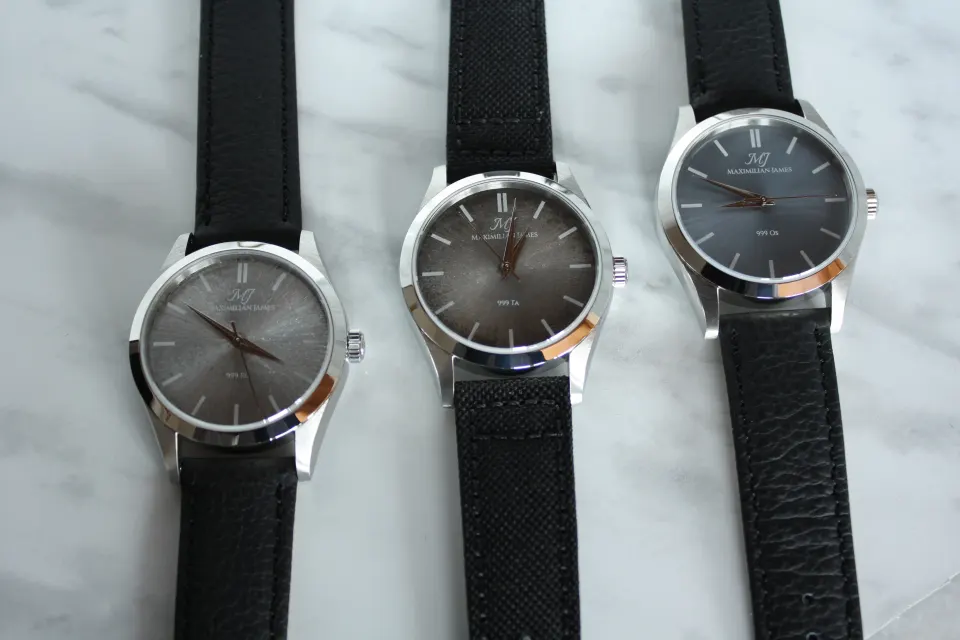
Unalloyed metals do not look alike. Each element has its own colour, which comes to light on the surface of the metal. Nothing here is tinted or plated to reach a shade. Some are cool and others are warm. Some hold a steady tone and others shift slightly as your wrist turns.
Which of those suits you is a matter of taste — and of what you wear it with. If you would like a second opinion on that, Maximilian James is happy to advise. Ask him which metal fits your style →
This is the reasoning of the watchmaker who makes them. Maximilian James on why he built the brand this way →
Osmium watches: one of the rarest dial metals on earth
World production of osmium runs to around one tonne a year, against more than three thousand tonnes of gold. That scarcity is not a marketing position, it is a fact. It is also the only element with a natural blueish lustre in solid form. The colour is the metal itself, not a tint or a plating. Osmium is additionally the densest element that occurs in nature. The dial colour and weight are the first thing most people notice when they see and pick up an osmium watch.
The property that makes it difficult is the melting point — above 3,000 °C, which makes casting no good way to process it. That also made the development of the dial challenging. More about osmium as a metal.
How an osmium dial is made
Because osmium cannot be melted and poured easily, the block is sintered instead: The powder is pressed under extreme pressure at high temperature in an oxygen-free environment until it forms a dense, pore-free solid. That work happens at MetaMetals in Austria together with our partner. Pressing the powder straight into disc shape — the obvious shortcut — was tried during development and abandoned, because the discs had no structural stability. Dial blanks of roughly 0.7 millimetres are then wire-cut from the block.
The finishing is the part that nearly ended the project. One commercial dial finisher's standard abrasives could not make a single mark on the surface; a second offered to try only if €20,000 was paid up front to build an airtight chamber, with no guarantee. Maximilian took over the grinding himself. And it was an enormous challenge to grind a 0.7 millimetres osmium disk. Osmium is brittle as well as extraordinarily hard. Four dials broke during grinding and two more during assembly. Despite all these setbacks he succeeded and now does the sunburst grind himself instead, guiding the tool by hand across every dial — which is why no two are quite identical. The full account is on his partner page.
"You hold this little machine in your fingers and glide it over the dial while the dial turns on the table. You don't do it in one go — you work for a minute or two, then take a short break and make a few adjustments. But the dial is ready when it looks ready. You can't feel it. You have to see it."
Maximilian James, MJ Watches, August 2026
"The way I grind them is quite a rough grind, so you really see the texture of the metal. Because it's done by hand it isn't perfectly machined, and that gives it a certain vibrancy — the streaks aren't perfect, so it has a certain life to it. And it will always shimmer, whether there's a lot of light or very little."
Maximilian James, MJ Watches, August 2026
Ruthenium and tantalum dials
Ruthenium is a platinum-group metal nearly as rare as osmium, and it behaves quite differently on a dial: a cool, velvety anthracite that absorbs light rather than reflecting it. The result is unusually high contrast against pale hands and indices — a more legible watch than the osmium version, if that matters to you.
Tantalum is a refractory metal that is rarer than gold in the universe, with a distinctive dark grey to slightly purple cast that has made it increasingly popular in wedding bands and luxury watch cases. Unlike osmium it is rolled rather than sintered, so the production route is different.
Both are made to order. Unalloyed gold, silver and copper dials are available too, certified the same way — configure any of the six on the product page.
What comes with the watch
Every watch arrives with two certificates: one signed by Maximilian James for the watch itself, and a digitally signed PDF certificate of authenticity from MetaMetals documenting the dial metal, its minimum purity, minimum weight and serial number.
That pairing matters more than it might sound. The dial holds most of the watch's material value, so being able to demonstrate what the metal is and where it came from is what makes a private resale straightforward years later.
Why buy a watch from Maximilian James
The watch
- Unalloyed elemental dial — never plated
- Hand-ground sunburst, one dial at a time
- 39 mm steel case, sapphire, Swiss Sellita SW300
- Assembled and inspected in Germany
The service
- Two certificates, including our digitally signed PDF
- Serial number engraved on the rotor
- Insured worldwide shipping
- Bespoke dials and retrofits on request