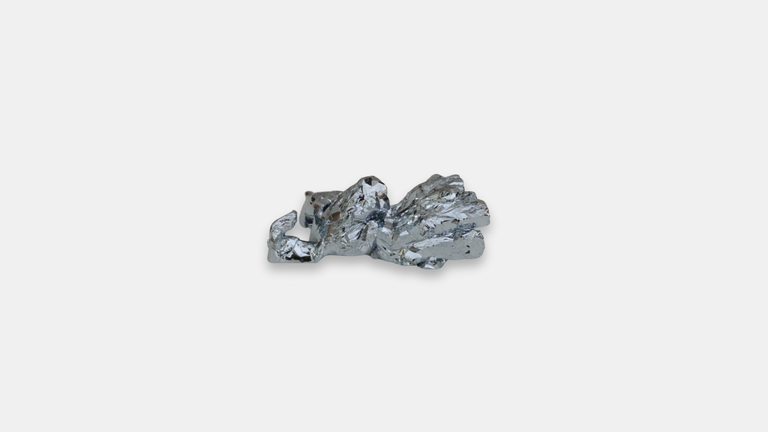
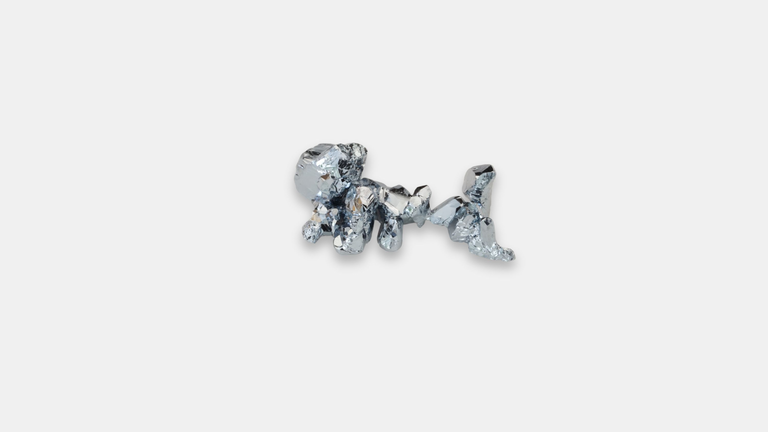
What is a tokenized commodity?
A real world asset (RWA) is a real asset — such as a government bond, a currency, real estate, or a commodity like gold — that is represented as a token on a blockchain. A tokenized commodity is exactly that: The token represents a claim on a real commodity that exists physically and is held in custody off the blockchain.
Real world assets range from tokenized government bonds — above all US Treasuries — through currencies and private credit to commodities and real estate. Tokenized currencies and bonds dominate the market. A stablecoin is nothing other than the tokenized form of a currency — usually the US dollar — and is itself generally backed by RWAs: By US Treasuries and other real-world assets, all the way to gold.
Within commodities, tokenized gold is by far the largest market today. Precious metals are among the soundest foundations for an RWA. That is exactly where MetaMetals starts — but goes a step further: We tokenize not only gold, but rare precious metals such as osmium, rhodium, iridium, and other platinum-group metals (PGMs). A particular focus lies on osmium crystals, with which we intend to launch and grow our venture. It is precisely this focus that also sets MetaMetals' technological approach apart: We use non-fungible tokens, whereas gold is usually represented on the blockchain with fungible tokens.
In short: A MetaMetals Commodity NFT is a tokenized real-world asset — a tokenized precious metal backed 1:1 by a physical metal in an audited vault.
If you want to dig deeper into how such a token is built and works, the full explanation is on the Commodity NFTs page.
What is a token?
A token on a blockchain is a digital unit of value or rights recorded and managed on an existing blockchain network — as distinct from the network's own native cryptocurrency.
TokenThe key difference: A blockchain like Ethereum has its own built-in currency (Ether). A token is something additional that someone creates using that blockchain's infrastructure — usually via a smart contract, a small program that defines how many tokens exist, who owns them, and the rules by which they are transferred. The blockchain serves as a shared, tamper-proof ledger that records who owns what.
Tokens can be broadly divided into two kinds: Fungible tokens (interchangeable, every unit worth the same) and non-fungible tokens (each one unique). This very distinction determines how a precious metal is tokenized — we explain it in detail, with a graphic, in the Fungible vs. non-fungible section.
Fungible vs. non-fungible: The decisive difference
Tokenized gold is usually fungible: Tokens are freely interchangeable, meaning the underlying bars or ounces are not distinguished. It is purely about the commodity, and one gram is like any other gram. A tokenized precious-metal crystal is non-fungible: Each crystal is one of a kind, with its own surface formed during crystallization that never repeats.
This is more than a technical detail — it is the heart of the differentiation. A non-fungible RWA combines the liquidity of a digital token with the uniqueness of a genuine collectible and real-world asset.
Interchangeable & divisible
Identical, mutually interchangeable units — ideal for divisible value.
7.5 units — fractions are possible.
Equal units, freely combinable — even a fraction can be traded.
Unique & indivisible
Each token one of a kind — not divisible, so acquired only as a whole.
No fraction possible — only as a whole.
A single, unique token — acquisition always requires the full amount.
Why precious metals make ideal real world assets
Not every asset is equally suited to tokenization. Precious metals are among the best candidates. Here are several reasons that set precious metals apart from other RWAs.
Scarcity
The platinum-group metals are among the rarest stable elements in the Earth's crust. This scarcity is grounded in physics — not in an emission cap written into a smart contract.
Durability
Precious metals do not corrode and do not lose their substance. A real-world asset that remains unchanged over decades is the ideal foundation for a token that derives its value from it.
Intrinsic value
Precious metals have an intrinsic, globally recognized value. They have served as a store of value for millennia and prove themselves especially in times of crisis and inflation.
Uniqueness
With crystallized precious metals, a further reason reinforces this. Every precious-metal crystal has a unique surface, and every piece differs. This natural distinctiveness fits perfectly with a one-of-a-kind token. Each crystal is assigned to exactly one token. This enables a true, non-fungible 1:1 mapping between a specific physical piece and its digital twin.
How MetaMetals tokenizes a precious metal
It is important to note that the steps described are in the development phase and do not represent a finished process chain. Each physical metal is stored, made uniquely identifiable, and only then represented digitally:
From crystal to Commodity NFT
Click one of the five steps in the graphic to see what happens at that stage.
The full mechanics — including on- and offboarding, vault, audits, and storage fees — are described in detail on the Commodity NFTs page.
Advantages and limits of tokenization
Tokenization changes how a real-world asset can be held and traded — but it is not an end in itself, and not a solution without trade-offs. Here is a sober assessment: What it delivers, why openness is central to it, and where its limits are.
1 What tokenization delivers
Representing a physical real-world asset as a token has several concrete advantages over both physical self-custody and platform-dependent, closed trading solutions:
Liquidity & tradeability
A tokenized metal can be transferred digitally without shipping the physical piece. This opens up a market that is accessible anytime, anywhere, and makes goods tradable with greater liquidity.
Physical & digital ownership
Instead of a platform-dependent solution, ownership becomes digitally transferable. The physically backed token can now be transferred from one wallet to the next without any sign-up.
Integrability
As a token, a real-world asset can be plugged into further applications — for example as collateral for a loan. This creates additional utility and demand.
Accessibility
Trading is not tied to opening hours, dealers, or national borders. Access to an otherwise hard-to-trade real-world asset becomes broader.
Perfect for unique pieces
A crystallized precious metal is one of a kind — its surface never repeats. The NFT standard is the only digital form that represents exactly this one piece rather than just “a quantity of metal.” For our approach to Commodity NFTs, this is the ideal technology for representing crystallized precious metals digitally.
Visible trading data
Every transfer is recorded on-chain. This creates a complete, tamper-proof history of a piece — from the first token to the current holder. For a new, tradable asset class, this yields transparent trading data that simply does not exist with purely physical ownership.
Important: These advantages only arise when the token is reliably bound to a real, deposited metal. Without physical backing, a token is just a digital entry.
2 Why open source builds the trust
Tokenization is built on smart contracts — programs that execute the rules automatically on the blockchain. What matters is that this code is open source:
Open-source code can be reviewed by anyone. You do not have to trust that a provider keeps to the rules. You can verify for yourself that no one can secretly create more tokens out of nothing, that the digital processes work the same for everyone, and that the technical functionality and promises really hold. For an asset that represents real ownership, this verifiability replaces blind trust in the centralized digital platform of a single actor.
This is not a substitute for verifying and proving the physical backing (the audit). But it does demonstrate that a provider values transparency, openness, and the security of its buyers. Open-source code is therefore not a technical detail here, but the real trust anchor of tokenization — alongside the physical backing in the vault.
3 Limits and drawbacks
Tokenization does not solve every problem — and it brings its own. We name the limits openly and show directly how MetaMetals addresses each one. Tap a limit:
A blockchain can record beyond doubt who owns a token — but on its own it cannot prove that the corresponding metal is actually physically in the vault. This link to the real world is created off-chain and is only as reliable as the processes behind it. Without genuine backing or its verification, the token is ultimately just a digital entry without substance.
Audited vaults and regular proof-of-reserve audits substantiate the deposit. Each piece also carries a serial number and a digitally signed PDF certificate of authenticity — so every token is verifiably anchored in the physical world.
Unlike a purely digital token, a physically deposited metal incurs ongoing real costs: Secure, insured custody must be paid for. If these storage fees are not charged or not settled, an unbounded backlog of costs looms — in the worst case, the provider ends up carrying the burden. So a reliable mechanism is needed that secures the fees even when a holder forgets or fails to pay them.
We bring the real storage costs on-chain. If fees remain unpaid, an auction contract automatically liquidates the affected token — following the proven model of collateral auctions used by well-known lending protocols. This keeps the system viable and distributes costs fairly.
The legal framework for tokenized real-world assets is young and still evolving. What applies today can change, and depending on the region and the specific design, different regulations apply. This uncertainty affects all providers in the tokenized-asset space and cannot simply be defined away.
MetaMetals aligns with the MiCA framework. We communicate openly which functions are already live and which are planned, and we deliberately make no return promises. Rather than feigning certainty, we keep transparent what applies and what is still being clarified. We deliberately seek dialogue with supervisory authorities (Austria — FMA, Germany — BaFin, Europe — ESMA) to obtain the necessary licenses.
All software carries risks: Smart contracts can contain bugs in the code, and on the user side wallets can be lost or private keys stolen. Such risks are inherent to digital ownership and can never be reduced fully to zero.
We build on the established, widely proven ERC-721 standard, have the contracts carefully audited, and keep the code open source. This makes the contracts' behavior publicly verifiable and reduces the risk as far as possible.
Markets for tokenized assets are in part still young and thin. That means liquidity is not guaranteed and prices can fluctuate — especially for rarer metals beyond gold, for which there is not yet a broad, established trading venue.
Every token is backed 1:1 by physical metal and is redeemable at any time. Highly rare precious metals always have an intrinsic value and cannot become worthless like shares or unbacked coins. This provides security even in quiet trading phases. At MetaMetals there is also no ICO and no separate speculation token — the value comes from the real-world asset itself. The risk is equally a major opportunity, since tokenization gives a trading venue to precious-metal crystals that are hard to trade anyway. A relatively unknown collector's item could thereby suddenly gain considerable attention and notable market interest.
For many, the technology behind wallets, keys, and on-chain transactions is unfamiliar and quickly overwhelming. This complexity is not just inconvenient — it carries real risks: Anyone managing a wallet themselves can fall for phishing, lose credentials to fraudulent sites, or irretrievably transfer assets with a single wrong click. Less experienced users in particular are especially at risk here.
We take three approaches. First, clear documentation of the tokenized solution that explains, step by step, how to handle the technology safely and how to recognize phishing attempts. Second, the MetaMetals Marketplace: A secure, centralized solution that offers a more traditional path to trading — without having to manage a wallet yourself or expose yourself to the risks of self-directed on-chain use. This keeps access open to everyone, regardless of technical background. Third, the path leads to established platforms in the digital-asset space (crypto exchanges and asset managers) that take on secure custody for their customers.
Tokenization is a tool, not a miracle cure: Its value stands or falls with the quality of the physical backing, the openness of the code, and an honest handling of its limits.
How MetaMetals addresses these points concretely — audited vaults, serial-numbered certificates of authenticity, and an audited contract architecture — is described under Commodity NFTs and Certificates of Authenticity.
Note: This information is for general explanation only and is not investment advice. Tokenized assets can lose value; parts of the functionality described are still in development.
The economic model in brief
Because every token is backed 1:1 by physical metal and can be redeemed for the physical piece at any time, it has a price floor: The token always has an intrinsic value and cannot fall to zero like other assets (shares, unbacked coins, bonds). There is no ICO and no separate speculation token — the value comes from the real-world asset itself. At MetaMetals we additionally work, through integrations, to deliberately increase demand for our tokenized products and bring them to a broader market.

Regulation & trust
Tokenized real-world assets operate within an evolving regulatory framework. In the EU, the MiCA regulation (Markets in Crypto-Assets) provides the framework for crypto assets. MetaMetals aligns with this framework and deliberately seeks dialogue with the supervisory authorities — the FMA in Austria, BaFin in Germany, and ESMA at the European level — to obtain the necessary licenses. We communicate openly which functions are already live and which are planned, and we deliberately make no return promises. Rather than feigning certainty, we keep a transparent record of what applies and what is still being clarified.
MetaMetals relies on trust-building measures and proofs: Every physical product carries a serial number and a digitally signed PDF certificate of authenticity, and we guarantee a minimum weight and a minimum purity. In the area of tokenization, alongside the infrastructure we are working on licensing.
Before a release, the smart-contract code is published as open source and subjected to an extensive audit. Beyond that, we are working on custody and on audits for it — a reputable proof of reserve. At MetaMetals we never take the trust our customers put in us and our products for granted.
All of this represents a considerable cost factor and is a sign that MetaMetals is set up as a long-term project. These costs are borne by our founders themselves, without any prior ICO and without selling digital assets to raise capital.
Frequently asked questions
A tokenized real-world asset is a real, physical asset — such as a precious metal — represented as a token on a blockchain. Because it is backed by a physical real-world asset, the token also holds an intrinsic value.
Yes. Precious metals are among the classic examples of real world assets. Thanks to their scarcity, durability, and intrinsic, recognized value, they are especially well suited to tokenization.
Tokenized gold is usually fungible — every token is interchangeable. A tokenized precious-metal crystal is non-fungible: Each crystal is a serial-numbered one of a kind. You can find the full comparison on the Commodity NFTs page.
As asset-referenced tokens (ARTs), tokenized precious metals fall under the MiCA framework (Markets in Crypto-Assets) in the EU. MetaMetals is working on licensing for Commodity NFTs. We deliberately seek dialogue with authorities (e.g. the FMA in Austria) to ensure the necessary regulatory conditions. One significant step, for example, is producing a compliant whitepaper.
Each physical metal is stored before being represented digitally and is uniquely assigned via a serial number and a digitally signed PDF certificate of authenticity. The token is created only after the physical deposit. This process is in development.
For buyers, no separate tokenization fees arise for precious-metal crystals with a minimum weight of 5 g. The token is part of the product. The costs of licensing, audits, and the technical infrastructure are pre-financed by the founding team. There is no upfront ICO and no issuance of speculative tokens for funding.
Yes. Every token is permanently linked to a specific physical piece and can be redeemed for it. Onboarding and offboarding connect the physical metal with its digital twin at any time — delivery of the original redeems the corresponding token. This process is in development.
The tokens are issued via smart contracts on an established, public blockchain (Ethereum). The smart contract defines how many tokens exist, who owns them, and the rules by which they are transferred; the blockchain serves as a shared, tamper-proof ledger that records ownership and transfers transparently.
Ready to own a real-world asset digitally?
Start with a one-of-a-kind physical piece and get updates on the Commodity NFT launch straight to your inbox.